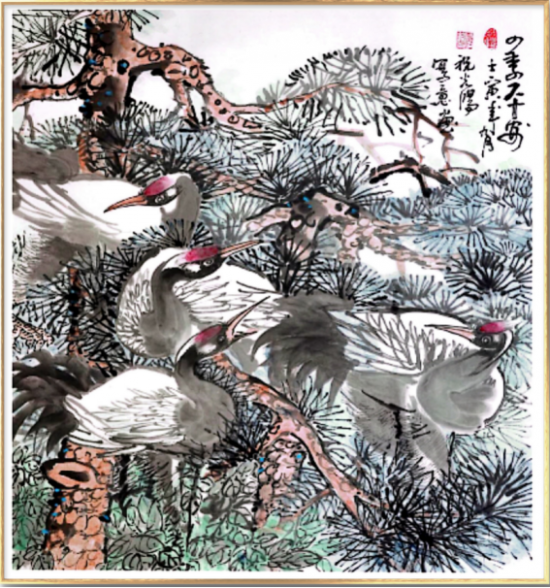
2024年中欧书画名家国际艺术线上交流展——祝光鸿
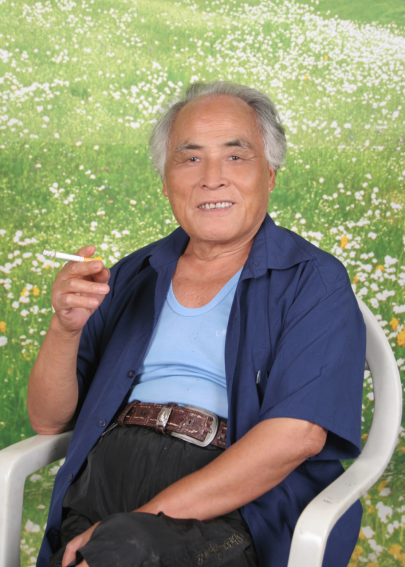
祝光鸿,浙江省建德市人,1938年8月出生,艺名:山里人。社会兼职:中国美术家协会会员、中国书法家协会会员、中国书画艺术高级美术师(家)、中国国画家协会会员、中国通俗文学研究会会员、中国书画名家研究会名誉主席、中国纪实文学研究会会员、中国作家创作协会会员,中国九州枫林国际书画院院士、华夏夕阳红书画协会理事、杭州市美术家协会会员、中国国际画院院士、中国回忆录研究会终身会长、中国非物质文化艺术传承人。
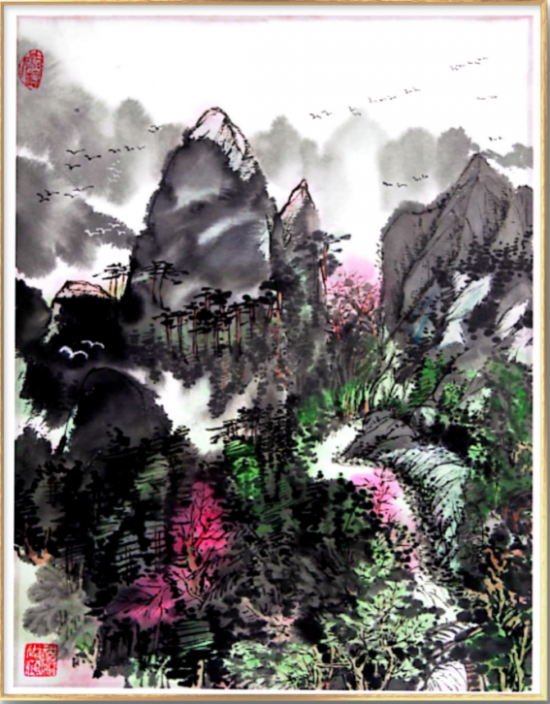
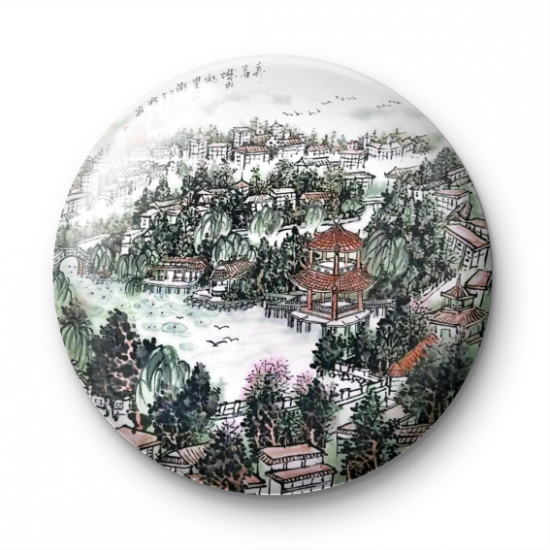
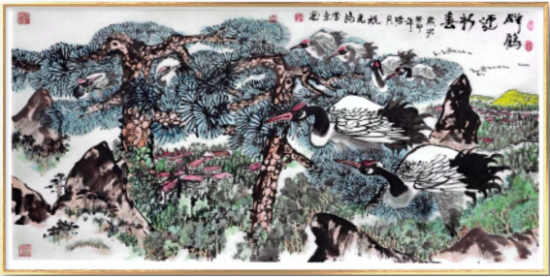
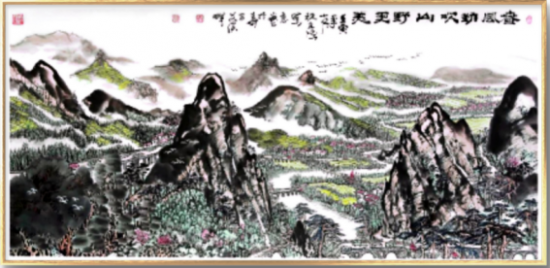
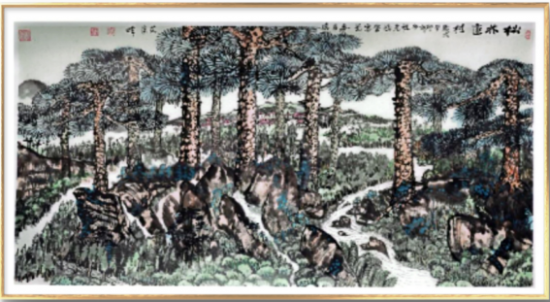
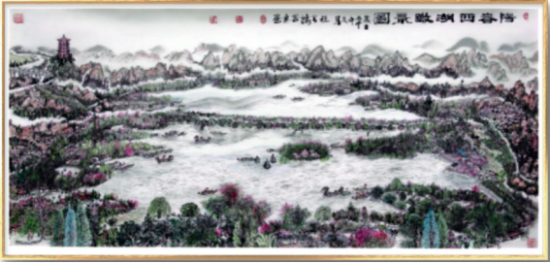
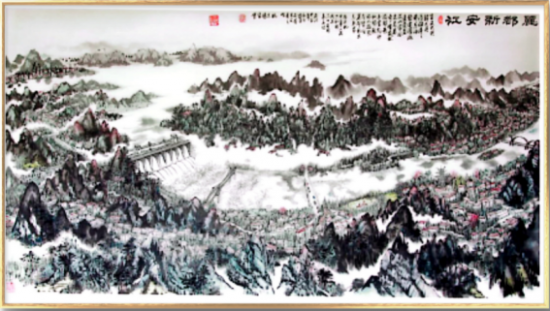
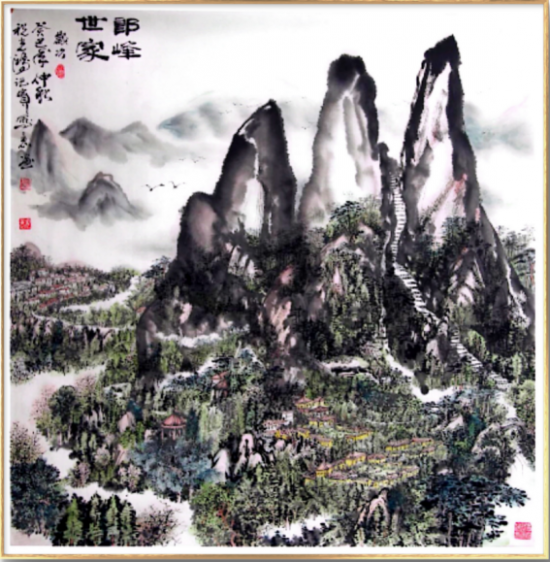
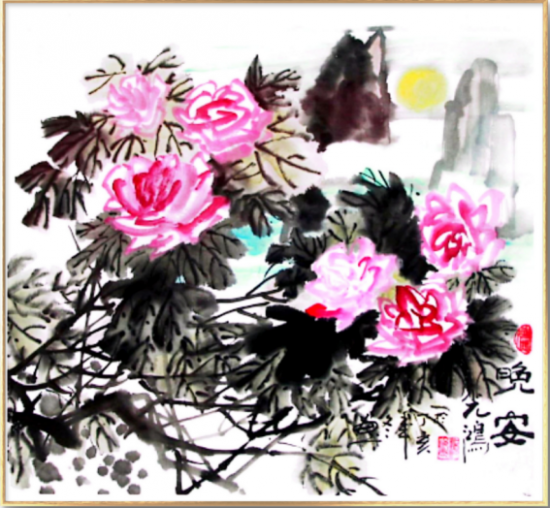
1951年至1957年7月系中、小学学生。1958年参加工作,1961年5月4日参加共青团。开始走向自学文学、美术、代课、民办教师的漫长道路;1969年至1970年12月因绘画被打成“现行反革命”,回乡劳动改造。1971年1月复职,1980年12月转为公办教师,其间曾任学校业务主管、负责人、乡镇人民代表、小学校办厂长之职。一直从事教育工作,1992年4月退休,退休后一直从事书画、文学创作。创作了《新安江山水》、《山城风光》、《西湖览景》、《永康方岩全景图》、《江郎山韵图》等二十多幅大型实景国画作品,八十余幅花鸟国画作品。其中入编国家级大型画册出版发行作品52幅,国家、省、市报刊发表42幅,获金奖七幅,银奖一幅(包括诗词、格言金奖)。其中论文“党中央十七届六中全会提出建设文化强国宏伟目标是新时期全党全民的奋斗目标”入编《国学·作家·诗人名鉴》(3卷)由中国作家出版社出版,国家新华书店总店发行经销,多家主要刊物刊发,引起国家政坛重视,获金奖。
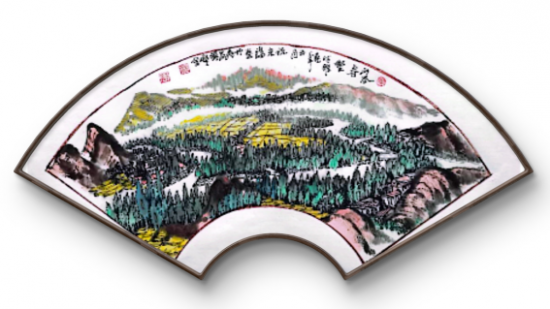
个人事迹入编《世界优秀专家人才名典》、《共和国功勋人物志》、《新中国60年传世文艺家》《新中国书画60年》等。2010年7月被“中国焦点人物杂志社”根据出版、报刊等各大新闻媒体推荐评为“中华精英人物”。2011年美术作品六幅入编《世界艺术通史》,人生格言65条入编《21世纪名人诗词格言经典》,由中国文化传媒出版社出版发行。
2012年中共中央组织部党建研究室举办的“建党90周年优秀干部评选活动”中荣获“优秀干部”称号。2012年8月个人业迹及文学作品、格言10条,诗词五首入编大型爱国主义教育文献《共和国史册上的优秀儿女》(由中国国史研究编修馆研究室、中华人民共和国日史编辑委员会编撰,中国家谱出版社出版)授予“德艺双磬的艺术家”光荣称号。2012年9月人生格言12条入编“古今中外名家语录精编”《永恒的光辉》,由华人国际新闻出版集团面向世界出版发行。2012年7月受邀中国艺术学会出版个人专访特刊。
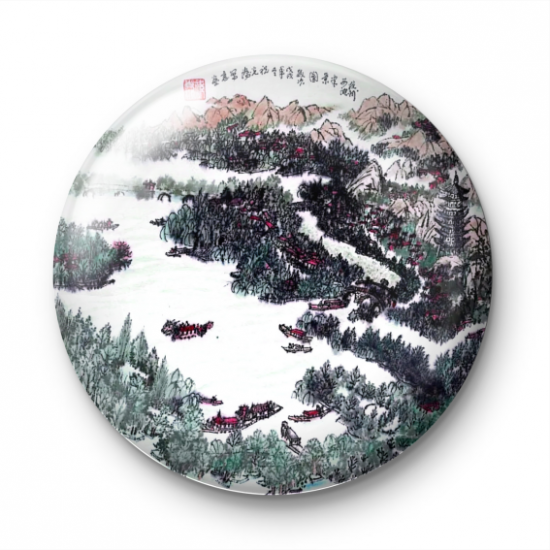
作品《人间天堂》、《江郎山》等十二幅经国家邮政局审核同意作纪念邮票图案通用出版发行。
艺术源于生活,是时代的花朵、时代的结晶;不同时代的艺术,有不同的艺术价值。她无统一的标准、模式,只要能反映时代生活、促人向上、受人民群众青睐的文学艺术都是好作品。
人类生活犹如茫茫大海,时代花朵千紫万红,异彩纷飞,这就需要我们的艺术家、文学家深入生活接受教育和陶冶,汲取精华、概括生活内涵,才能描绘抒写出反映时代的好作品。
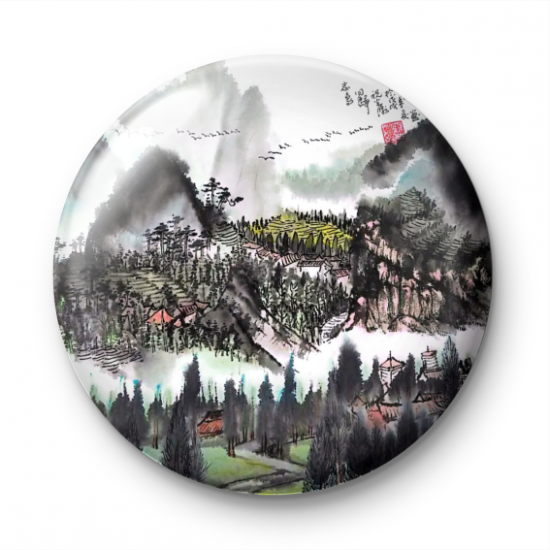
“密不通风,疏可走马”、“注意画面留白”、“挫落”、“虚虚实实”、“浓淡有匀”……等教学述语,是绘画者熟耳的语言。但是怎样“密”?如何“疏”?又怎样“留白”、“挫落”?至今没有解答结论,还是要绘画者在创作中去摸索、看看画画……我经过几十年的绘画创作体会到:其实还是写作知识。所谓“密”,就是对表现画面中心部分(中心段)应该画仔细,绘周全,达到中心画面突出;对陪衬部分的画面,要色淡,稀少,“疏”、“虚”,防止画面喧宾夺主;对画面中的远近、浓淡层次间的部位“多留白”画云,有利于整个画面承上启下,远近层次统一,引人寻味联想。为了达到更好的视觉效果,再从整体画面着手去“挫落”修整。
一个成熟人的气质风度、思想境界是由他(她)的生活经历、文化修养和基因个性组合而成的。不能一朝一夕学会,也不能强装做作。艺术家在完成创作作品中用词、写句,用笔运墨中离不开自我的思想境界、观点,所谓“诗言志”、“墨迹显人性”的流露。同时在创作中,从安排绘画素材、处理画面布局、详略素材搭配及技巧等基本技能,都需作者的组织能力、概括能力、文学修养等写作技能。可见文艺工作者具备一定的思想精神与文化素质的重要。文学修养不仅是人为修养的基础,也是一切文艺工作者从事文艺创作的基础,需要重视文学学习。
伟大的文艺家贺绿汀说得好:“任何艺术,脱离了自己的民族,便是没出息的;民族的,才是世界的。”因此对中国画的改革应该坚持继承传统基因技能前提下,吸取现代生活内容,实行改革探索。教育者教人要先教做人,传授艺术要先传授人品。引导学生深入生活,向人民大众学习,努力克服“文人相轻,同行必妒”的封建恶习。才能广泛团结广大同仁,为实现中华民族文化复兴“中国梦”共同奋斗。
Zhu Guanghong, born in August 1938 in Jiande City, Zhejiang
Province, with the stage name Shanli Ren. Social part-time jobs: member
of the China Artists Association, member of the China Calligraphers
Association, senior artist (master) of Chinese calligraphy and painting
art, member of the China Artists Association, member of the China
Popular Literature Research Association, honorary chairman of the China
Calligraphers and Painters Research Association, member of the China
Documentary Literature Research Association, member of the China Writers
Creation Association, academician of the China Kyushu Fenglin
International Calligraphy and Painting Academy, director of the China
Sunset Red Calligraphy and Painting Association, member of the Hangzhou
Artists Association, academician of the China International Painting
Academy, lifelong president of the China Memoirs Research Association,
and inheritor of China's intangible cultural and artistic heritage.
From 1951 to July 1957, I was a primary and secondary school
student. I started working in 1958 and joined the Communist Youth League
on May 4, 1961. Starting to embark on a long path of self-learning
literature, art, substitute classes, and private teachers; From 1969 to
December 1970, he was labeled as "current counter revolutionary" due to
his paintings and returned to his hometown for labor reform. I resumed
work in January 1971 and became a public teacher in December 1980.
During this time, I served as the school's business supervisor, person
in charge, township representative, and primary school factory director.
I have been working in education and retired in April 1992. After
retirement, I have been engaged in calligraphy, painting, and literary
creation. I have created more than 20 large-scale real-life Chinese
painting works, including "Xin'an River Landscape", "Mountain City
Scenery", "West Lake Scenery", "Yongkang Fangyan Panorama", "Jianglang
Mountain Rhyme", and more than 80 flower and bird Chinese painting
works. Among them, 52 works were included in the national large-scale
picture album for publication and distribution, and 42 were published in
national, provincial, and municipal newspapers and magazines, winning
seven gold awards and one silver award (including a gold award for
poetry and maxims). The paper "The magnificent goal of building a strong
cultural country proposed by the Sixth Plenary Session of the 17th
Central Committee of the Communist Party of China is the goal of the
whole party and the people in the new era" was included in the "National
Studies, Writers, and Poets Mirror" (3 volumes), published by China
Writers Publishing House, distributed and distributed by the National
Xinhua Bookstore, and published in multiple major publications, which
attracted attention from the national political arena and won a gold
medal.
My personal achievements have been included in the "World
Excellent Experts and Talents Dictionary", "Records of Meritorious
Figures of the Republic", "60 Years of Inherited Literary and Artists in
New China", "60 Years of New Chinese Calligraphy and Painting", etc. In
July 2010, he was recommended by major news media such as publishing
and newspapers by the China Focus People Magazine as a "Chinese Elite
Figure". In 2011, six art works were included in the "General History of
World Art" and 65 life maxims were included in the "Classic Poems and
Mottoes of 21st Century Celebrities". They were published and
distributed by China Culture and Media Publishing House.
In 2012, the Party Building Research Office of the Organization
Department of the Communist Party of China Central Committee won the
title of "Excellent Cadre" in the "90th Anniversary of the Founding of
the Communist Party of China Outstanding Cadre Selection Activity". In
August 2012, I was awarded the honorary title of "Artist of the Double
Bells of Virtue and Art" for my personal career, literary works, 10
maxims, and five poems, which were included in the large-scale patriotic
education literature "Excellent Children in the History of the
Republic" (compiled by the Research Office of the Chinese National
History Research and Editing Museum, the Japanese History Editing
Committee of the People's Republic of China, and published by the
Chinese Genealogy Publishing House). In September 2012, 12 life maxims
were included in the compilation of "Eternal Glory" by famous quotes
from ancient and modern Chinese and foreign scholars. It was published
and distributed to the world by the Chinese International Press and
Publication Group. In July 2012, I was invited by the Chinese Art
Society to publish a personal interview special issue.
Twelve works, including "Heaven on Earth" and "Jianglang
Mountain", have been approved by the National Post Office for universal
publication as commemorative stamp patterns.
Art originates from life and is the flower and crystallization
of the times; Art from different eras has different artistic values. She
has no unified standards or models, and any literary and artistic works
that can reflect the life of the times, promote progress, and be
favored by the people are good works.
Human life is like a vast sea, with colorful flowers of the
times. This requires our artists and writers to go deep into life,
receive education and edification, absorb essence, and summarize the
connotation of life in order to describe and express good works
reflecting the times.
Teaching slogans such as "dense and unobstructed, sparse but
easy to walk", "pay attention to leaving blank space in the picture",
"setback", "virtual and real", "even intensity", etc. are familiar
language to painters. But how to be "secret"? How to "sparse"? How to
"leave blank" and "fail" again? So far, there is no answer to the
conclusion. It is still necessary for painters to explore and see
painting in their creations... After decades of painting creation, I
have realized that it is actually writing knowledge. The so-called
"secret" means that the central part (central section) of the
performance image should be carefully and thoroughly drawn to achieve a
prominent central image; For the accompanying parts of the picture, the
color should be light, sparse, "sparse" or "empty" to prevent the
picture from being dominated by noise; By leaving more white space
between the distant and distant layers in the picture, it is beneficial
for the entire picture to connect the past and the future, unify the
distant and near layers, and evoke thought-provoking associations. In
order to achieve better visual effects, we need to start with the
overall picture and adjust it accordingly.
The temperament, demeanor, and ideological realm of a mature
person are composed of their life experience, cultural cultivation, and
genetic personality. You cannot learn it day and night, nor can you
pretend to be artificial. Artists cannot do without their own
ideological realm and viewpoints when using words, sentences, and ink to
complete their creative works. The so-called "poetry expresses
aspirations" and "ink reflects human nature" are expressed. At the same
time, in the process of creation, basic skills such as arranging
painting materials, processing screen layout, detailing material
combinations and techniques all require the author's writing skills such
as organizational ability, summarization ability, and literary
cultivation. It can be seen that it is important for literary and
artistic workers to possess certain ideological, spiritual, and cultural
qualities. Literary cultivation is not only the foundation of human
cultivation, but also the foundation for all literary and artistic
workers to engage in literary creation. It is necessary to attach
importance to literary learning.
The great literary and artistic figure He Luting once said, "Any
art that is detached from its own nation is unproductive; what belongs
to the nation is the world." Therefore, the reform of Chinese painting
should adhere to the premise of inheriting traditional genes and skills,
absorbing modern life content, and implementing reform exploration.
Educators should first teach how to be a good person, and when imparting
art, they should first impart character. Guide students to delve deeper
into life, learn from the general public, and strive to overcome the
feudal bad habit of "literati being inferior to each other, and
colleagues being jealous". Only by widely uniting our colleagues can we
work together to achieve the Chinese Dream of cultural rejuvenation of
the Chinese nation.