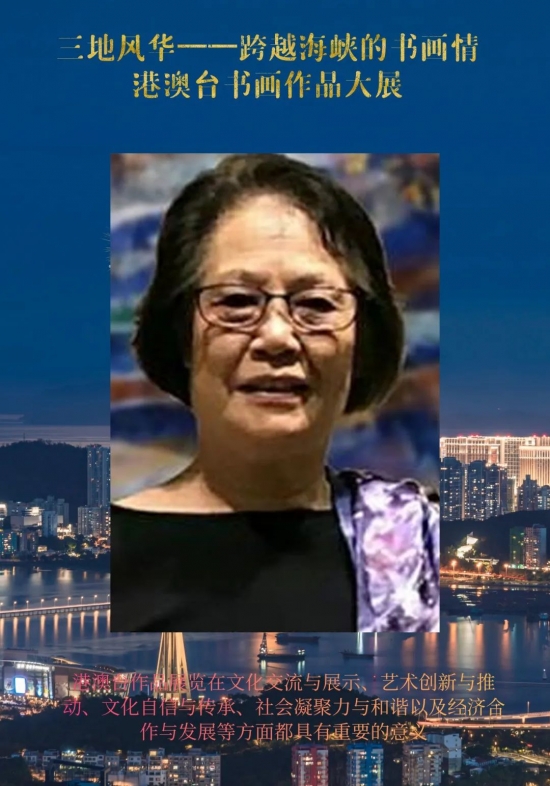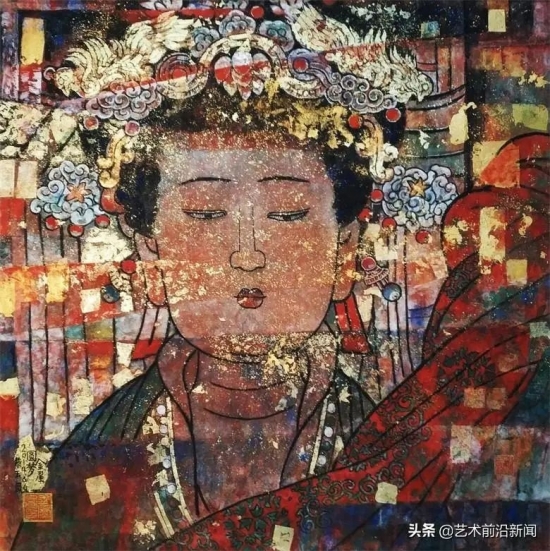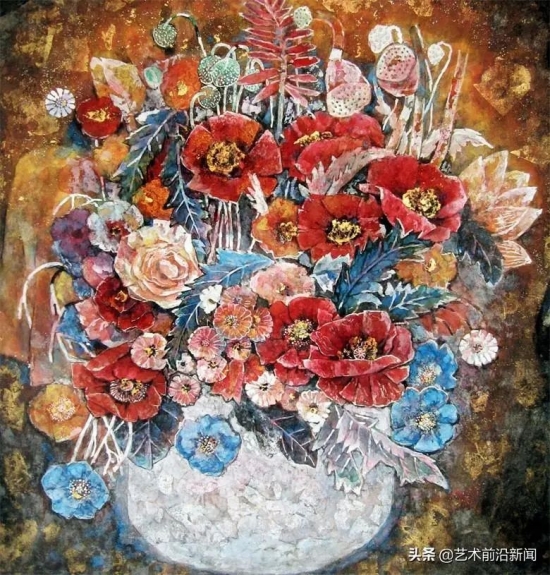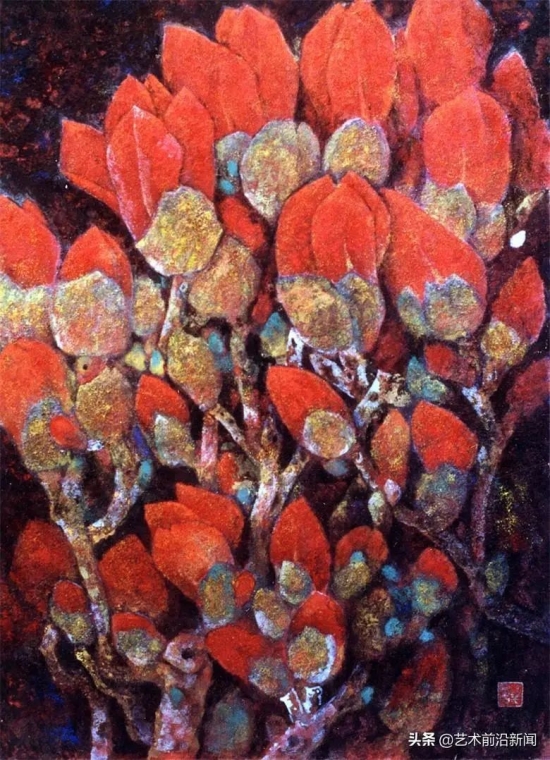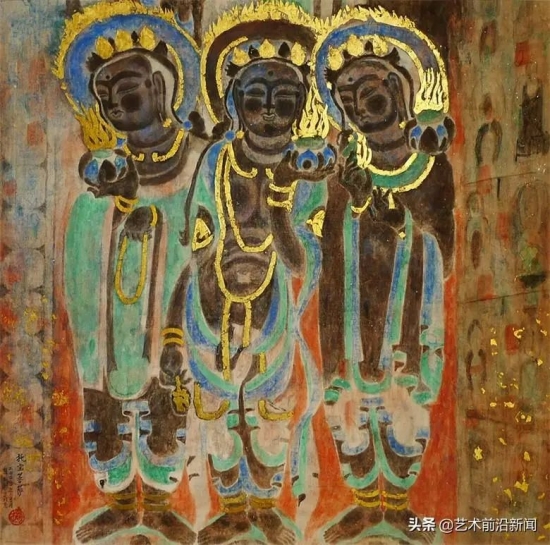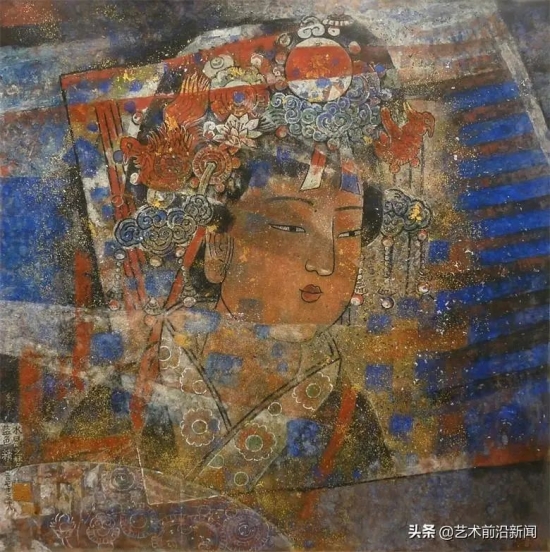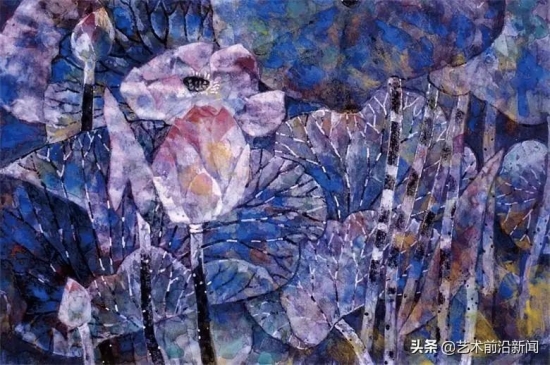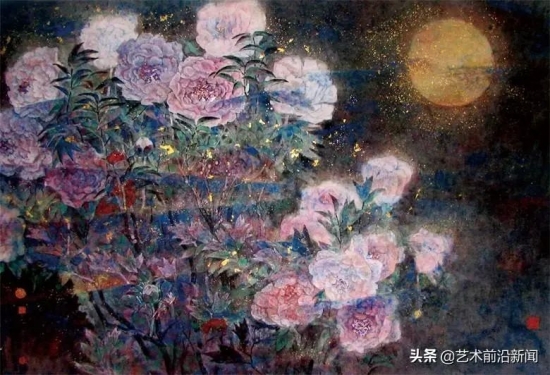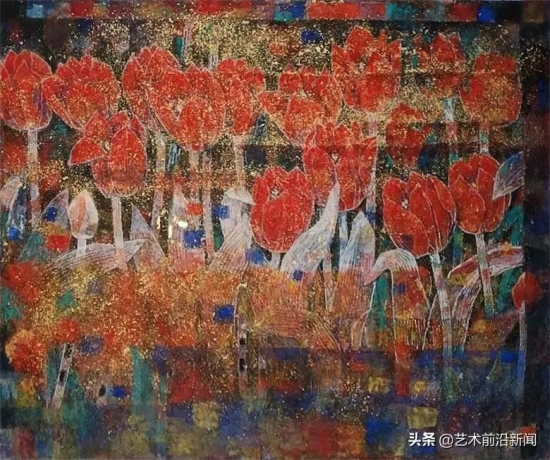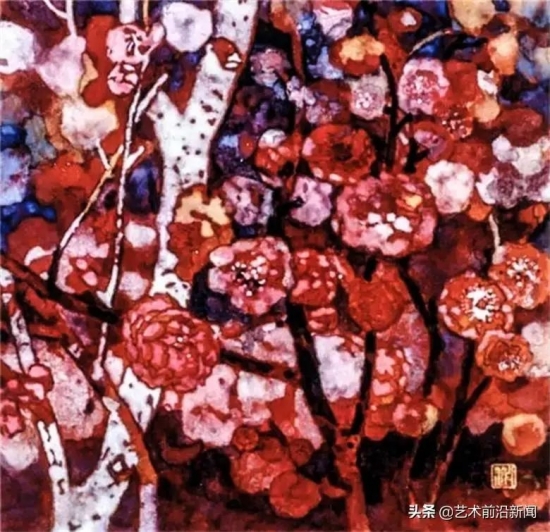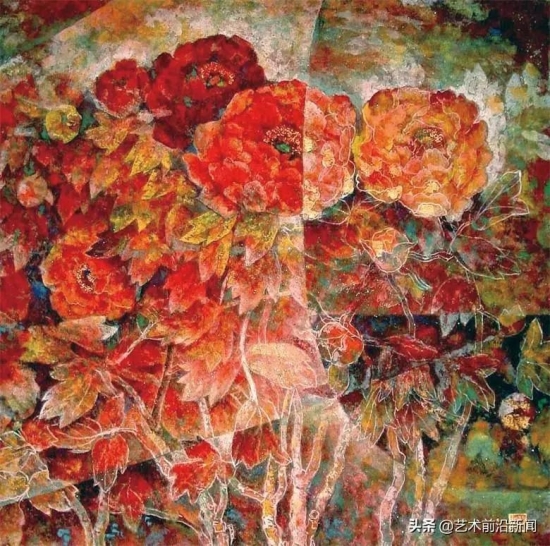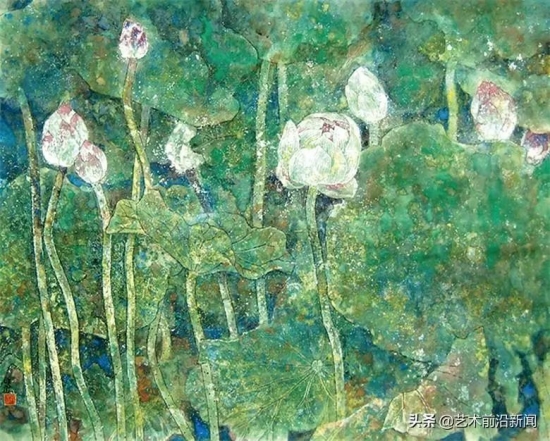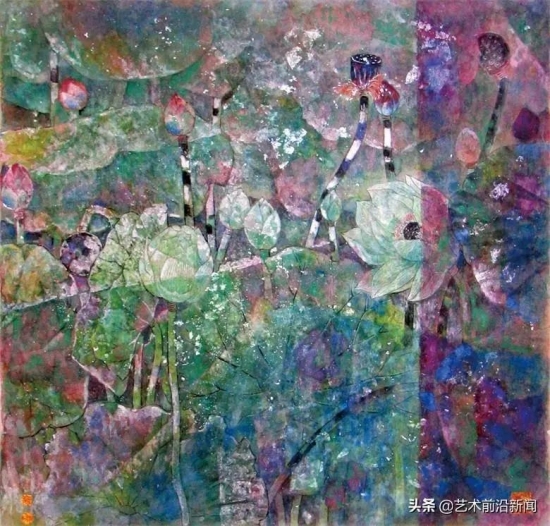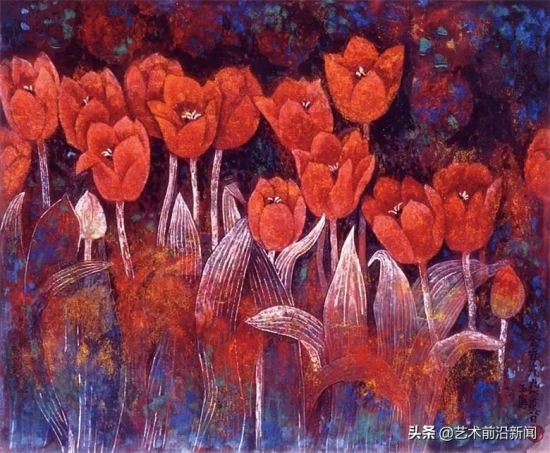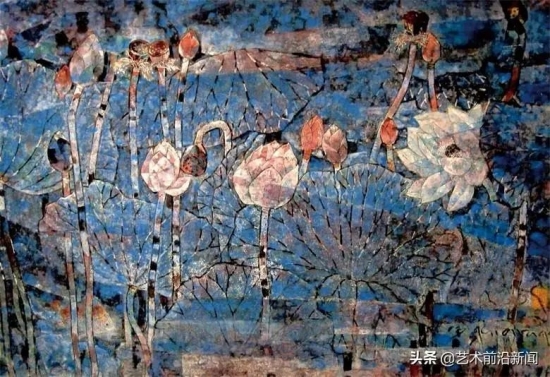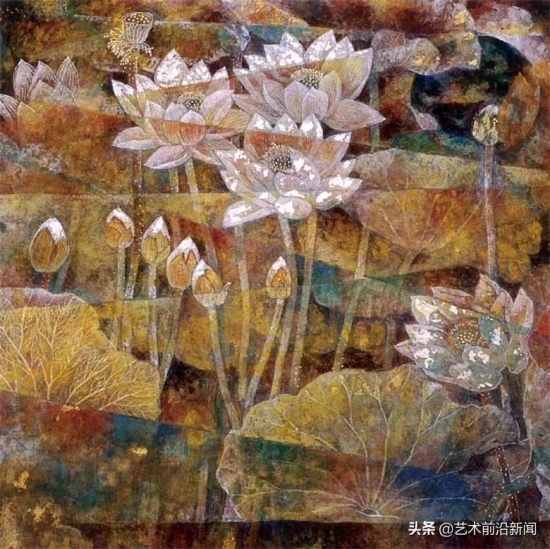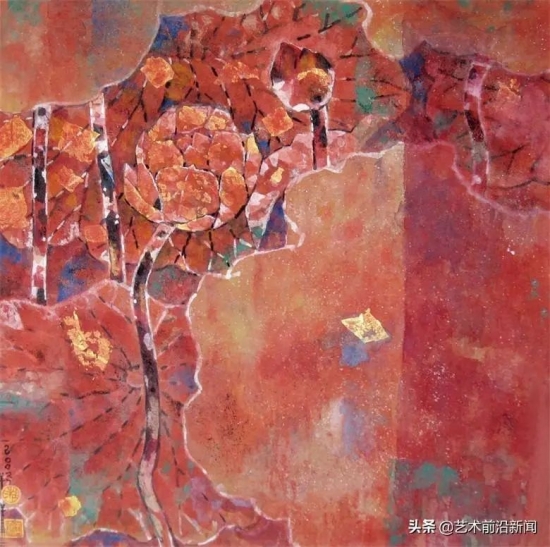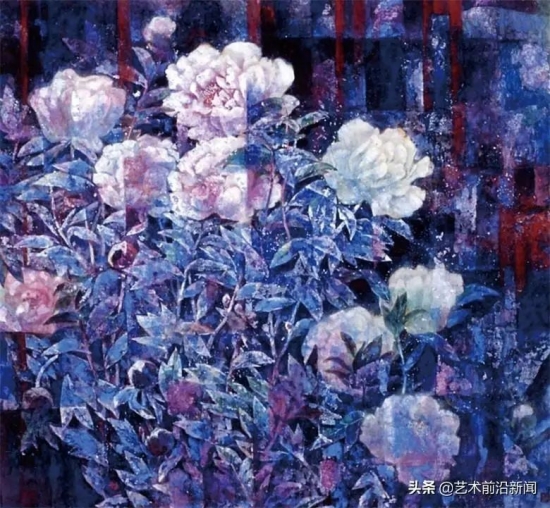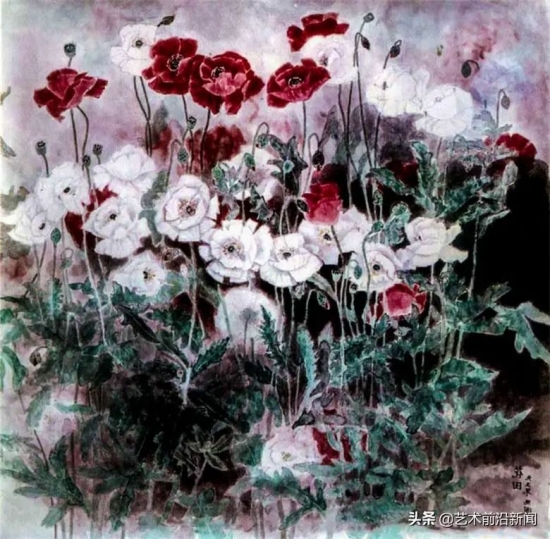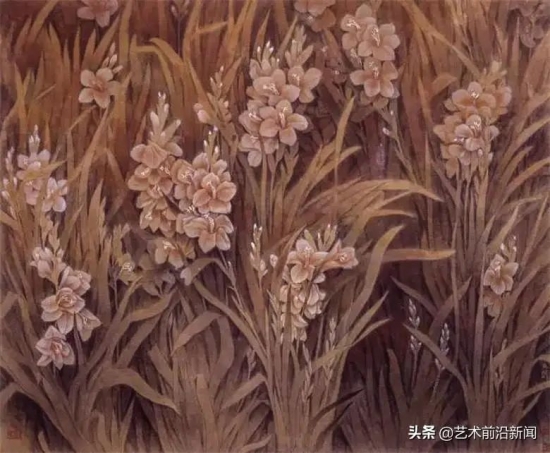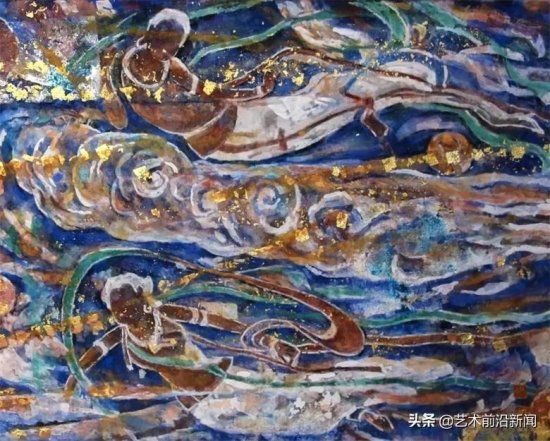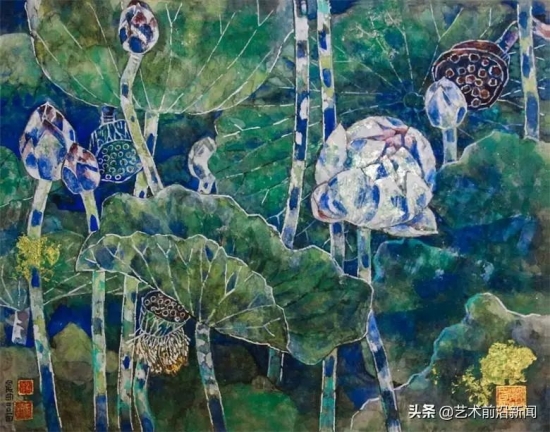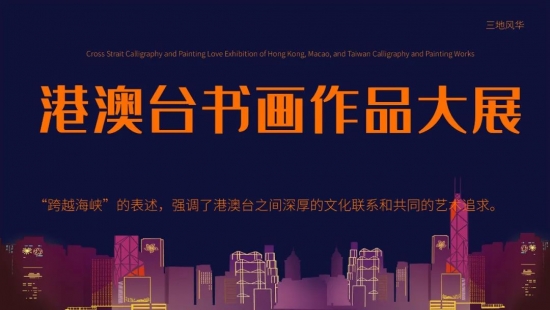
跨越海峡的书画情港澳台书画作品大展,对于推动港澳台地区书画艺术的发展具有重要意义。它不仅能够为书画家们提供一个展示和交流的平台,促进彼此之间的学习与借鉴,还能够增进三地之间的文化认同和友谊。同时,通过线上展览的举办,也能够让更多的人了解和欣赏到港澳台地区的书画艺术,推动中华文化的传承与发扬。 赵玉凤,女,汉族,1938年生于山西古县,1962年毕业于山西艺术学院美术系。1986年赴甘肃敦煌艺术考察,1989年至1992年,由国家文物局组织,先后多次赴山西芮城永乐宫壁画研究所进行大规模复制工作。国家一级美术师,中国美术家协会会员,北京现代工笔重彩画会员,中山书画社理事, 中国中外名人文化艺术研究会研究员.1989年12月6日,墨西哥驻华大使馆举办个人画展,其中26幅精品为国际友人收藏;1995年9月9日,中国当代美术馆举办中澳女画家《从不同开始》精品联展,其中10幅作品全部为澳使馆官员收藏1999年,受邀参加中国妇女活动中心《迎澳门回归》四人联展;1999年7月,作品《永乐宫壁画局部之西王母玉女部分》被中国古代建筑博物馆收藏;2002年5月1日,应邀赴澳大利亚昆士兰詹姆斯库克大学美术馆和文森特画廊举办的主题为《传统与现代——中国画现代重彩画展》,展期一个月,校长及部分艺术家教师均收藏其作品;其代表作品《长城之梦》《水星之梦》《静静的荷塘》《金星圆梦》等被集中出版,被《当代中华文化名家专题邮票》评审委员会评为“当代中国美术经典作品”,特授予“当代中国美术优秀艺术家”荣誉称号,并被中国国家博物馆收藏近十余年来,一直潜心创作,并积极参与公益事业,与传统文化一道,共绘精谨细腻的工笔画之春;2018年6月,作品《泊来金辉·红色郁金香》申请版权,并发布定制服装配饰等衍生品,演绎多维度传统文化;2018年9月,代表中国女画家出访欧洲参加水墨中国大展;2018年12月,其新作《敦煌舞乐·诸事保福》被收藏爱好者林峰以80万的价格拍出,后被献至福州保福寺典藏,并永久展览;2019年,其展现敦煌飞天艺术的作品《心源》问世,诠释着工笔重彩有界无边。 赵玉凤:纯粹而自然、和谐而美妙 在众多画家群体中,当某一个画家的作品映入眼底时,让你怦然心动,无疑是一种缘分,可遇而不可求。很长时间以来,赵玉凤的作品仿佛是一个磁场,带着超强的磁性,深深吸引着笔者,她那遒劲俊美的线条,跌宕而富有质感;美轮美奂的色彩,饱满而温润典雅;气韵飘举的人物形态,微妙而生动传神;光色交汇的花卉姿貌,又带着很强的装饰性……,意蕴悠远,留恋入心。 《金星圆梦》73x73cm 2014年作 笔者是否真的领会了赵玉凤作品的内涵,不一定,但是,当笔者反反复复观摩她的作品时,则让笔者有着自己的内心解读。 《静物》68x68cm 2003年 如果一个画家只在中国境内有市场,卖的好,却从未走出过国门,或者走出国门,在国外而无人问津,那么,按照美美与共的法则,这个画家就不算成功,即便他在国内卖的“很好”,也一定有“忽悠”的成分。赵玉凤则不然,二十几年前,赵玉凤的作品就不仅在国内有很多知己,在国外也有很多粉丝。赵玉凤的作品引起国外友人的关注,那是一次偶然,然而,任何“偶然”都一定经历由量到质的必然过程。有一次,赵玉凤参加朋友在澳大利亚大使馆的画展,当赵玉凤自信地把自己的作品拿给大使馆人员观看时,即刻吸引了众多目光,很多国外友人上前围观,议论纷纷,赞叹不已,由此,她迎来了一拨又一拨策展人的预约,先后多次在澳大利亚举办个人展览,也多次应邀在美国、新加坡等国家参加展览,好评如潮,掌声雷动,不绝于耳,“也卖了很多画”。其中,在澳大利亚的展览中,一位外国友人这样评价她的作品:“我们想象中的绘画都是荣宝斋的那样,您的作品和荣宝斋不一样,我很喜欢”,这无疑就是对赵玉凤最好的嘉奖,是的,艺术不需要陈陈相因地模仿,更不需要拜倒在前人脚下、不能直立地重复着古人的样式,艺术需要创作,需要独创性,艺术更需要由心的抒发。赵玉凤做到了。 《红色玉兰》 68x48cm 2003年 毫无疑问,赵玉凤对自己的作品是自信的,她的自信源于她那几十年深厚的绘画积淀、源于高度驾驭新时代艺术表现技法的能力、源于放眼世界的艺术视野,以及独到的艺术思辨。 《托宝菩萨·现代辉煌》68x68cm 2008年 对艺术,赵玉凤血脉中似乎天生流畅着艺术的基因,上世纪五、六十年代,在那个艰苦的岁月里,小孩能填饱肚子就是最奢侈的愿望,赵玉凤的青少年时期就是在那个年代渡过的,然而,赵玉凤与那些为了填饱肚子的小孩相比,有着自己的快乐,一片剪纸、一张年画都能让她心驰神往,如果能在绘画中,放飞一下梦想,无疑就是她最幸福的时光。正是对绘画有一种发自内心的喜欢,在同龄人中,赵玉凤显得有些不一样,她也凭借着两张小画就考取了山西美术学校(现在的西北工业大学)。由于基础好、有想法,又似若带着独有的绘画才情,很快,赵玉凤让老师觉得“应该重点培养”,在老师指引下,她找到了放飞自我的天地,如饥似渴地沉浸在自己的精神世界中,对传统笔墨,对光影、素描、色彩、造型等新时代艺术表现语言,她进行认真而系统地学习。乡里乡间、田间地头,画速写、画素描、搞创作,她很刻苦,也进步很快。后来,赵玉凤生活在北京,参加蒋彩平等著名画家的多种培训班,访名师、交名家,赵玉凤拓展了艺术视野,也打开了自己的艺术市场,成为一位名副其实的著名画家。 纵观赵玉凤的作品,可以发现,她的线条丰富而有弹性,洒脱而富有质感,这得益于她曾经对山西永乐宫壁画有过废寝忘食的临摹。八十、九十年代,文化部组织艺术家对山西永乐宫壁画进行复制,年轻的赵玉凤就是其中一员,当她面对山西永乐宫壁画时,壁画上,线条的穿插、疏密、飘举,一次次拨动着她的心弦,让她兴奋不已,累了,一条被单,席地而睡,饿了,一块干粮,就是一顿午餐,虽艰苦,但是,她乐在其中。大半年下来,当她看到一张张精微逼真的临摹,喜悦之情溢于言表。虽然,时过境迁,但是,现在看赵玉凤笔下的《临永乐宫壁画》,依然栩栩逼真、皆尽其妙,从中依稀看到她当年的那份认真、那份坚韧。正是临摹山西永乐宫壁画时,赵玉凤下过苦功,才练就了她落笔即成、运行肯定的线条,也正是对山西永乐宫壁画有着深入骨子里的理解,她笔下的线条才能游刃有余、有的放矢。如今,笔在手中,线在心中,心绪在哪里?笔尖的风华就停驻在哪里,赵玉凤完全可以做到“指哪打哪”,这是功夫,这样的功力凝聚着赵玉凤的汗水和智慧,也承载着他对艺术那一颗纯粹而执着的心。 《水星之梦·蓝色经典》 82x82cm 2017年 纵观赵玉凤的作品,也可以发现,她对色彩有着超出常人的驾驭能力,她对色彩的运用,似若带着哲学家的敏感,好像洋溢着诗人的气质。显然,这离不开她对敦煌壁画深入肌理的研究。赵玉凤临摹敦煌壁画如同临摹山西永乐宫壁画一样努力、勤奋、细致、刻苦,唯不同的是,当她面对着一幅幅沧桑恒古的敦煌壁画时,她带着思辨的意识、带着为我所用的舍取精神、带着触类旁通的技法融合,有临摹的实践性、有研究的合理性。观其笔下的《飞天》、《水星之梦》等系列作品,可以看到敦煌壁画斑驳陆离的年代感,也可以看到敦煌壁画色彩的晕染叠加,笔与笔、色与色,似若无意,却彰显着独特的色彩融合、彰显着独特的技法表现,体现出符号这个时代大众的审美标准。这些作品,赵玉凤在尊重敦煌壁画原貌的基础上,添加更加丰富的色彩,同时,又把金粉、银粉点缀在多种色彩交融之处,或自由挥洒、或块面构成,渲染一种缥缈而浑厚的视觉空间。交相辉映的色温变化、色差对比,气脉流动的虚实关系、空间转换,不再把观者的目光仅仅聚焦于一处具体的形象上,而是,让敦煌壁画原有的具象与苍茫空灵的意象融为一体,既以严谨秀逸之笔描绘出敦煌壁画的逼真效果,又以色彩的微妙关系构筑一个放飞遐想的空间,从而使色彩在变与不变的画面中,有层次、有流动性,充满视觉张力和艺术表现力。 艺术是心灵的呈现,是精神面貌的展示。观赵玉凤笔下《郁金香》、《百合花》、《玫瑰》、《牡丹》等等重彩花卉系列,中国传统笔墨的艺术血脉跃然纸上,但不墨守成规,勇于创新、善于变化,却不张扬、不跳跃。随类赋彩的画面,绚丽润泽,喜庆祥和,但是,浓而不艳,华美而不流俗;井然有序的枝叶穿插、组合,姿态摇曳的叶脉、花朵,动势栩然,妩媚而不妖娆;花瓣的晕染与勾勒,质感、体积感、空间感,层次分明,结构清晰,有含苞欲滴的、有缤纷绽放的、有优雅舒展的……,千姿百态,魅力诱人。赵玉凤以抒情的笔调通过眼中之美到心中之美再到笔底之美的过渡,把自然世界中的花卉描绘出一幅幅精彩纷呈的形式,充盈着朝气蓬勃的活力,又似若洋溢着沁人心智的清香。观者瞩目其间,心绪随着笔调的转换,仿佛获得一种温润灵魂的抚慰。 《花好月圆》 透过赵玉凤的花卉系列,可以发现,她以色彩斑斓的花卉,或讴歌、或抒情、或吟唱,托物抒怀,涤荡心灵,在一点一滴的笔触中,寄寓情感的流连,在艺术的韵律中,演绎属于自己的乐章,既恪守了中国画的笔情墨趣,又融合了中西现代审美意识的创作元素,既表现出中国画的神韵气质,又蕴含了印象主义、浪漫主义、古典主义等西方油画的丰富性,诸多艺术技法融为一体,表达着自己的艺术情趣,呈现出鲜明的个人风采。 艺术风格是一个艺术家的独特标志,其形成过程与艺术家的经历,紧密相连,漫长而复杂。毋庸置疑,赵玉凤的作品具有很强的辨识度,她的作品,哪怕在展厅的一角,哪怕观者匆匆瞥上一眼,也即刻知道,那属于赵玉凤的精彩,如一颗闪闪发光的明珠,璀璨夺目,神采飞扬。纵观赵玉凤的作品,不管是《飞天》系列、《水星之梦》系列,还是流光溢彩的花卉系列,都带有很强的独创性,当然,赵玉凤的独创性来源于源于博大的中国传统绘画艺术,是自然渐变的过程,是百炼成钢的锻造、也是凤凰涅槃的重塑,期间,有孤独的迷茫、有寂寞的挣扎、有疑惑的痛苦,更有独领风骚的喜悦和畅然,但是,不管怎样,赵玉凤始终勤勤恳恳、不知疲倦,她的绘画风格也正凝聚着她的人生感悟、艺术真谛、精神追求,以多种艺术元素汇聚而成,顺理成章、自然蝶变,也正是基于对艺术的真诚,也正是因为她那颗炽热的心,她才能创作出“走心”的艺术样式,纯粹而自然、和谐而美妙。 几十年来,赵玉凤从山西到山东再到北京,从对艺术如饥似渴的童年到功成名就的80多岁老人,那幼年时期,艰苦朴素而又对未来充满无限美好的憧憬;那中青年时期,天天面对传统绘画、面对世界艺术的沉浸与陶醉,那艺术的成熟时期,被藏家慕名追逐的荣誉感……,回想起来,犹如昨日的恋曲,回荡悠远,余音袅袅,如重温脉脉深情的容颜,历历在目、思绪绵绵。如今,赵玉凤仍然一如既往地维护着她的艺术家园,不断创作出超尘拔俗的阳春白雪。 Zhao Yufeng, female, Han ethnicity, was born in Guxian, Shanxi in 1938. She graduated from the Fine Arts Department of Shanxi Academy of Arts in 1962. In 1986, he went to Gansu Dunhuang for art investigation. From 1989 to 1992, organized by the National Cutural Heritage Administration, he went to Shanxi Ruicheng Yongle Palace Mural Research Institute for large-scale reproduction. National first-class artist, member of the Chinese Artists Association, member of Beijing Modern Gongbi Heavy Color Painting, director of Zhongshan Calligraphy and Painting Society, and researcher of the Chinese and Foreign Celebrity Culture and Art Research Association. On December 6, 1989, the Mexican Embassy in China held a personal art exhibition, of which 26 exquisite pieces were collected by international friends; On September 9, 1995, the Contemporary Art Museum of China held a joint exhibition of exquisite works by Chinese and Australian female painters titled "Starting from Different Places". All 10 works were collected by Australian embassy officials. In 1999, she was invited to participate in the four person joint exhibition "Welcoming the Return of Macau" at the China Women's Activity Center; In July 1999, the work "Part of the Yongle Palace Mural - The Western Queen Mother and Jade Daughter" was collected by the Museum of Ancient Chinese Architecture; On May 1, 2002, he was invited to the James Cook University Art Museum and Vincent Gallery in Queensland, Australia to hold a one month exhibition titled "Tradition and Modernity - Modern Chinese Painting Heavy Color Exhibition". The principal and some artists and teachers collected his works; His representative works, such as "Dream of the Great Wall," "Dream of Mercury," "Quiet Lotus Pond," and "Dream of Venus," have been published in a centralized manner. He has been awarded the title of "Classic Works of Contemporary Chinese Art" by the Evaluation Committee of the "Contemporary Chinese Cultural Masters Special Stamp," and has been awarded the honorary title of "Outstanding Artist of Contemporary Chinese Art." He has been collected by the National Museum of China for nearly a decade and has been dedicated to creating and actively participating in public welfare undertakings. Together with traditional culture, he has painted the spring of meticulous and delicate meticulous meticulous painting; In June 2018, the work "Bolai Jinhui · Red Tulip" applied for copyright and released customized clothing accessories and other derivative products, showcasing multi-dimensional traditional culture; In September 2018, representing Chinese female painters, she visited Europe to participate in the Chinese Ink Painting Exhibition; In December 2018, his new work "Dunhuang Dance Music - All Things to Protect the Blessings" was sold by collector Lin Feng for 800000 yuan, and later presented to the Baofu Temple in Fuzhou for permanent exhibition; In 2019, his work "Heart Source", which showcases the flying art of Dunhuang, was released, interpreting the meticulous and colorful art with boundless boundaries. Among the many groups of painters, when a painter's work catches your eye and makes you heart race, it is undoubtedly a fate that can be encountered but not sought after. For a long time, Zhao Yufeng's works seemed to be a magnetic field with super strong magnetism, deeply attracting the author. Her powerful and handsome lines were full of ups and downs and texture; Beautiful colors, full and warm and elegant; The graceful and lively character form is subtle and vivid; The floral appearance with intertwined light and color, combined with strong decorative elements, has a profound and lingering meaning that lingers in one's heart. Whether the author truly understood the connotation of Zhao Yufeng's works may not be certain, but when the author repeatedly observes her works, it allows the author to have their own inner interpretation. If a painter only has a market within China and sells well, but has never gone abroad, or has gone abroad and no one is interested, then according to the law of beauty and harmony, this painter is not considered successful. Even if he sells "very well" in China, there must be a "deceitful" element. Zhao Yufeng, on the other hand, was different. Over twenty years ago, Zhao Yufeng's works not only had many confidants in China, but also had many fans abroad. Zhao Yufeng's works have attracted the attention of foreign friends, and it was a coincidence. However, any "coincidence" must go through an inevitable process from quantity to quality. Once, Zhao Yufeng participated in a friend's art exhibition at the Australian embassy. When she confidently presented her work to the embassy staff for viewing, she immediately attracted a lot of attention. Many foreign friends came forward to watch, discussing and admiring her. As a result, she received appointments from a group of curators and held personal exhibitions in Australia multiple times. She was also invited to participate in exhibitions in countries such as the United States and Singapore, receiving rave reviews and thunderous applause, and "sold a lot of paintings". Among them, in an exhibition in Australia, a foreign friend commented on her works as follows: "Our imagined paintings are all like Rong Baozhai's. Your works are different from Rong Baozhai, and I really like them." This is undoubtedly the best praise for Zhao Yufeng. Yes, art does not need to be imitated by Chen Xiangyin, nor does it need to bow down to the feet of predecessors or repeat the style of ancient people upright. Art needs to be creative and original, and art needs to be expressed from the heart. Zhao Yufeng did it. Undoubtedly, Zhao Yufeng is confident in her works. Her confidence stems from her decades of profound painting accumulation, her ability to highly master new era artistic expression techniques, her artistic perspective that broadens the world, and her unique artistic thinking. As for art, Zhao Yufeng seems to be born with the gene of art in her blood. In the 1950s and 1960s, children's desire to fill their stomachs was the most luxurious. Zhao Yufeng spent her adolescence in that era. However, compared with those children who wanted to fill their stomachs, Zhao Yufeng has her own happiness. A piece of Paper Cuttings and a New Year picture can make her fascinated. If she can release her dream in painting, it will undoubtedly be her happiest time. It is precisely because of her genuine love for painting that Zhao Yufeng appears somewhat different from her peers. She also passed the entrance exam to Shanxi Fine Arts School (now Northwestern Polytechnical University) with two small paintings. Due to her strong foundation, ideas, and unique painting talent, Zhao Yufeng quickly made the teacher feel that "emphasis should be placed on cultivation." Under the guidance of the teacher, she found a place to unleash herself and immersed herself in her spiritual world. She studied traditional brush and ink, as well as new era art expression languages such as light and shadow, sketching, color, and shape, seriously and systematically. In the countryside and fields, she works hard in sketching, sketching, and creating. She also makes rapid progress. Later, Zhao Yufeng lived in Beijing and participated in various training courses for famous painters such as Jiang Caiping. He visited famous teachers and made friends with famous artists. Zhao Yufeng expanded his artistic vision and opened up his own art market, becoming a truly famous painter. Looking at Zhao Yufeng's works, it can be found that her lines are rich and elastic, free and textured, thanks to her previous copying of the Yongle Palace murals in Shanxi, where she forgot to eat and sleep. In the 1980s and 1990s, the Ministry of Culture organized artists to replicate the murals of Yongle Palace in Shanxi, and young Zhao Yufeng was one of them. When she faced the murals of Yongle Palace in Shanxi, the interweaving, density, and floating of lines on the murals repeatedly stirred her heartstrings, making her excited and tired. She slept on the ground with a sheet, hungry, and had a piece of dry food, which was a meal. Although it was difficult, she enjoyed it. For most of the year, when she saw intricate and realistic copies, her joy overflowed in words. Although times have changed, looking at Zhao Yufeng's "Linyongle Palace Mural" now, it is still vivid and full of wonders, vaguely showing her seriousness and resilience from the past. It was during the process of copying the murals of Yongle Palace in Shanxi that Zhao Yufeng worked hard to develop the lines that she could write and run with certainty. It was precisely because she had a deep understanding of Yongle Palace murals in Shanxi that her lines were able to be skillful and targeted. Now, with the pen in hand, the thread in the heart, where is the mood? The charm of the pen stops wherever it is, and Zhao Yufeng can completely achieve "pointing and hitting". This is kung fu, which embodies Zhao Yufeng's sweat and wisdom, as well as his pure and persistent heart towards art. Looking at Zhao Yufeng's works, it can also be found that she has an extraordinary ability to control colors. Her use of colors seems to be imbued with the sensitivity of a philosopher and the temperament of a poet. Obviously, this cannot be separated from her in-depth study of the texture of Dunhuang murals. Zhao Yufeng imitated Dunhuang murals with the same effort, diligence, meticulousness, and hard work as she imitated Shanxi Yongle Palace murals. The only difference is that when she faced the ever-changing Dunhuang murals, she carried a speculative consciousness, a spirit of sacrifice for my own use, and a fusion of techniques that touched and connected with others. She had the practicality of copying and the rationality of research. Observing the series of works such as "Flying Apsaras" and "Dream of Mercury" in his works, one can see the diverse sense of time in Dunhuang murals, as well as the halo and overlap of colors in Dunhuang murals. Although the strokes and colors seem unintentional, they demonstrate a unique color fusion and unique technical expression, reflecting the aesthetic standards of the masses in this era of symbols. On the basis of respecting the original appearance of Dunhuang murals, Zhao Yufeng added richer colors to these works. At the same time, he also embellished gold and silver powders in the blending of various colors, freely sprinkling or forming blocks, rendering a vague and rich visual space. The contrasting color temperature changes and color differences, as well as the virtual and real relationships and spatial transitions of the flow of qi, no longer focus the viewer's attention solely on a specific image. Instead, the original concrete images of Dunhuang murals are integrated with the vast and ethereal imagery. This not only depicts the realistic effect of Dunhuang murals with rigorous and elegant brushstrokes, but also constructs a space of imagination through the subtle relationship of colors, so that colors in the changing and unchanging picture have layers, fluidity, and are full of visual tension and artistic expression. Art is the presentation of the soul and the display of the spiritual outlook. Observing Zhao Yufeng's heavy colored flower series such as "Tulip", "Lily", "Rose", "Peony", etc., the artistic bloodline of traditional Chinese ink is vividly depicted on paper, but it is not conservative, innovative, and good at change, but not bold or jumping. The picture is painted with colors according to the category, magnificent and moist, festive and peaceful, but rich but not glamorous, gorgeous but not vulgar; The orderly interweaving and combination of branches and leaves, the swaying veins and flowers, with vivid movements, are charming but not enchanting; The halo and outline of petals, with a clear sense of texture, volume, and space, have distinct layers and clear structures. There are buds that are about to drip, colorful blooms, and elegant stretches... They are diverse and charming. Zhao Yufeng uses a lyrical style to transition from the beauty in her eyes to the beauty in her heart, and then to the beauty at the bottom of her pen, depicting the flowers in the natural world in brilliant and diverse forms, filled with vibrant vitality, as if filled with a refreshing fragrance. The viewer's attention was drawn to it, and their mood shifted with the tone of the pen, as if they were receiving a warm and soothing soul. Through Zhao Yufeng's flower series, it can be found that she uses colorful flowers, either to sing, express emotions, or sing, to express emotions and cleanse the soul. In every stroke, she embodies the lingering emotions, and in the rhythm of art, she interprets her own movements. She not only adheres to the brushstrokes and ink interests of Chinese painting, but also integrates the creative elements of modern Chinese and Western aesthetic consciousness. She not only expresses the charm and temperament of Chinese painting, but also contains the richness of Western oil paintings such as Impressionism, Romanticism, and Classicism. Many artistic techniques are integrated to express her own artistic taste, presenting a distinct personal charm. Collect. Art style is a unique symbol of an artist, and its formation process is closely linked to the artist's experience, which is long and complex. Undoubtedly, Zhao Yufeng's works have strong recognizability. Even in a corner of the exhibition hall, even if viewers quickly glance at them, they immediately know that the brilliance that belongs to Zhao Yufeng is like a sparkling pearl, dazzling and full of vitality. Throughout Zhao Yufeng's works, whether it is the "Flying Sky" series, "Mercury Dream" series, or the colorful flower series, they all have a strong originality. Of course, Zhao Yufeng's originality comes from the vast traditional Chinese painting art, which is a natural gradual process, a forging of steel through refinement, and a reshaping of Phoenix Nirvana. During this period, there are lonely confusion, lonely struggles, doubts and pain, as well as the joy and smoothness of leading the way. However, no matter what, Zhao Yufeng always works diligently and tirelessly, and her painting style is also a reflection of her life insights. The essence of art and spiritual pursuit are formed by the convergence of various artistic elements, which naturally change and flow naturally. It is precisely based on her sincerity towards art, and it is precisely because of her passionate heart that she can create "heartless" works The artistic style is pure and natural, harmonious and wonderful. For decades, Zhao Yufeng traveled from Shanxi to Shandong and then to Beijing, from a childhood thirsty for art to an 80 year old man who achieved great success and fame. During his childhood, he worked hard and lived a simple life, yet was full of infinite and beautiful aspirations for the future; During that young and middle-aged period, I was immersed and intoxicated with traditional painting and world art every day. In the mature period of art, the sense of honor pursued by collectors... Looking back, it was like yesterday's love song, echoing far and wide, with lingering melodies, like a nostalgic face, vividly remembered, and my thoughts lingering. Nowadays, Zhao Yufeng still maintains her artistic home as always, constantly creating extraordinary scenes of spring and snow.