跨越海峡的书画情港澳台书画作品大展,对于推动港澳台地区书画艺术的发展具有重要意义。它不仅能够为书画家们提供一个展示和交流的平台,促进彼此之间的学习与借鉴,还能够增进三地之间的文化认同和友谊。同时,通过线上展览的举办,也能够让更多的人了解和欣赏到港澳台地区的书画艺术,推动中华文化的传承与发扬。 何占福,中国美术家协会理事,宁夏美术家协会主席,宁夏书画院专职画家。中国艺术研究院访问学者,宁夏山水画研究院院长,石嘴山市书画院院长,宁夏文联委员,宁夏文史馆研究员,被自治区评为“塞上文化名家”,“四个一批”人才,享受市政府津贴,是第十一届宁夏自治区人大代表。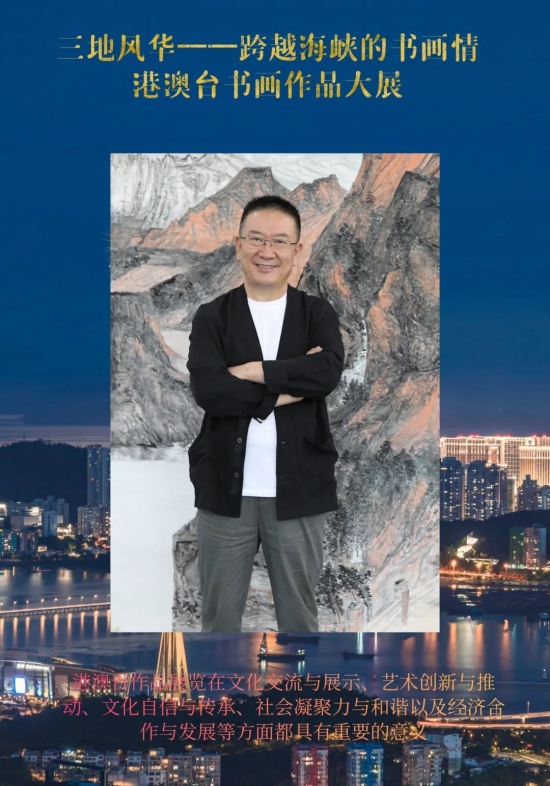
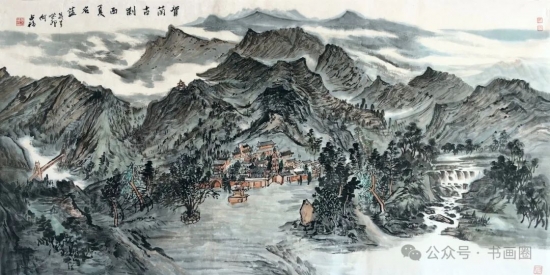
贺兰古刹西夏名蓝
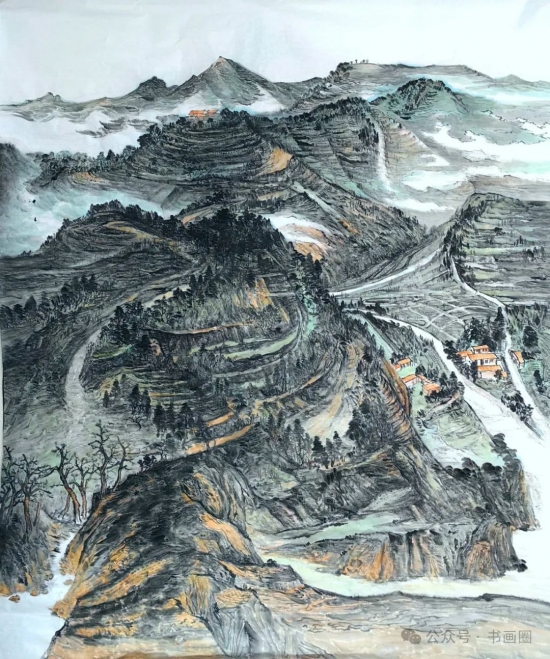
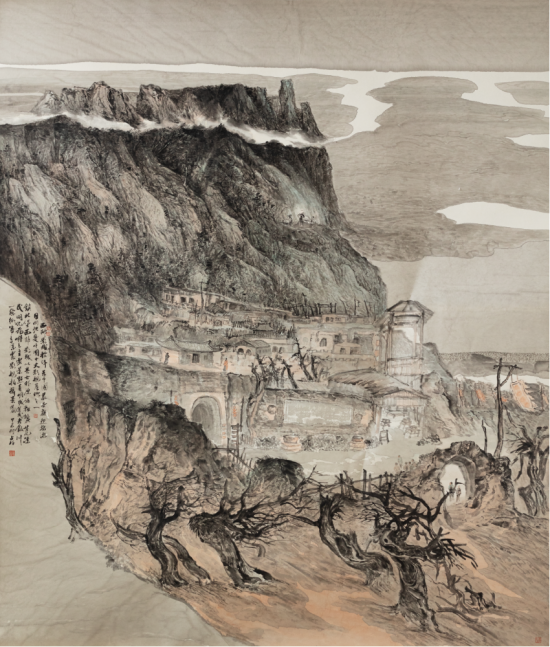
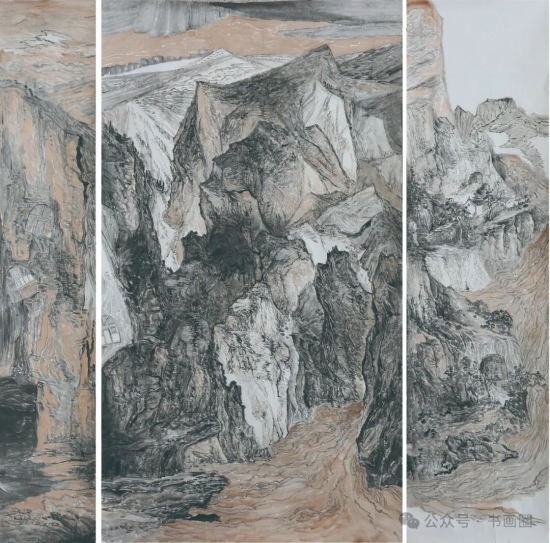
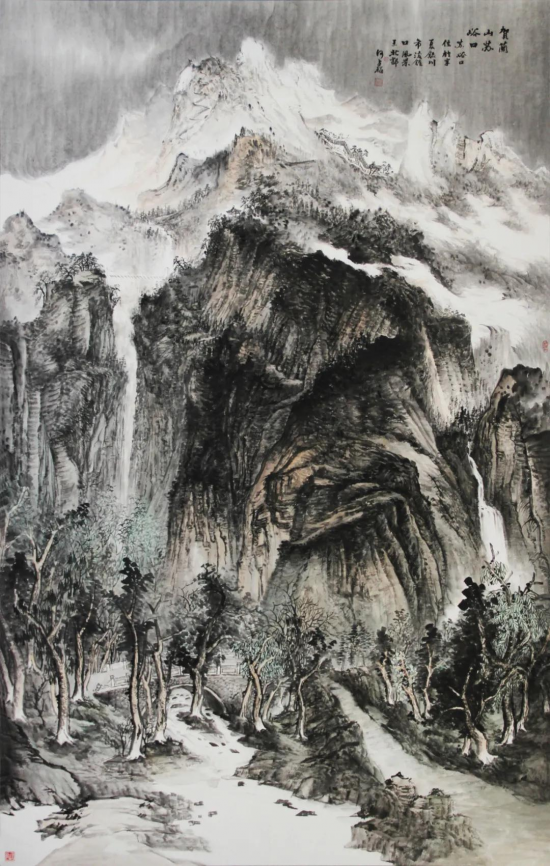
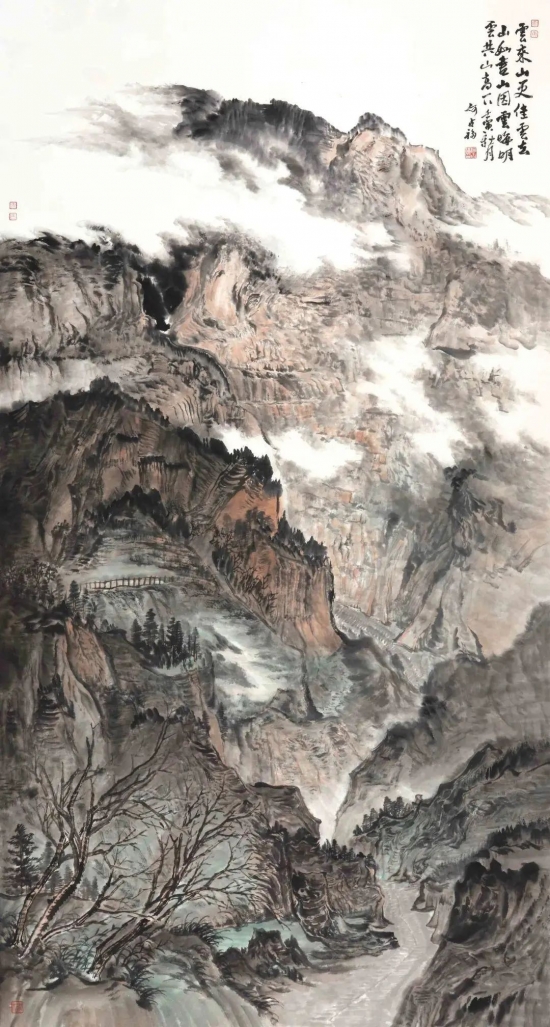
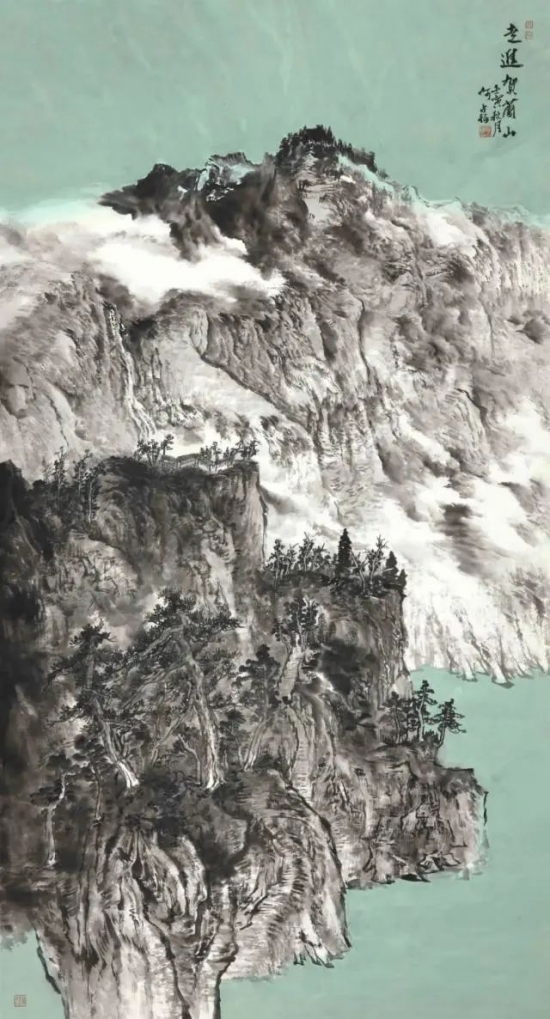
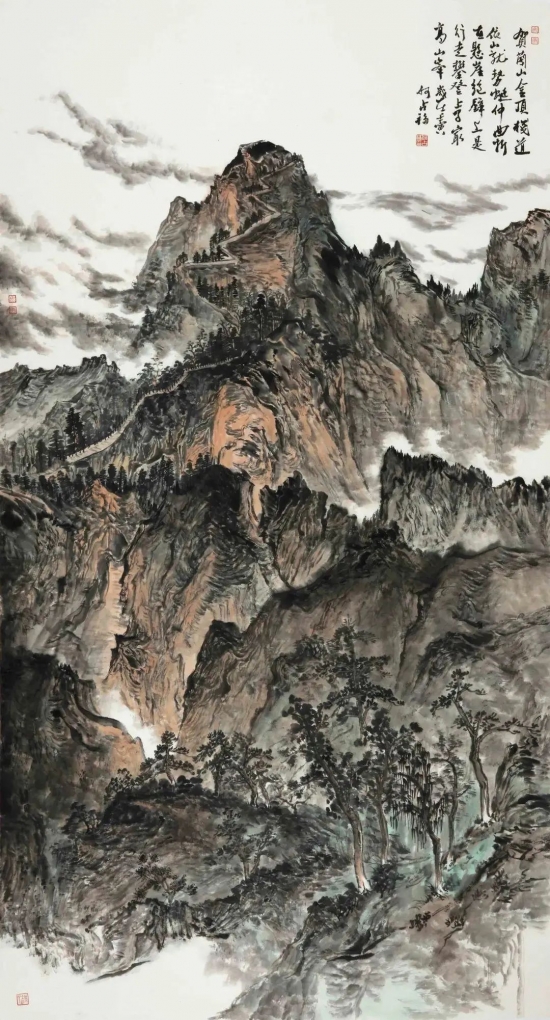
苍茫写万里江山 雄浑绘心中世界 —— 何占福山水画作品欣赏 文/桑干 一遍遍翻阅何占福的山水,徜徉其间,品味、咂么,让笔者不由自主地感慨。 作为在书画圈摸爬滚打20多年的评论工作者,笔者曾与很多艺术家打过交道,也解读过不少艺术作品,应该说笔者也练就了一眼可辨好坏的审美眼光,那么,笔者结合自己对绘画的认知为何占福写几句短评,表述一下对何占福的理解,应该至情至理。 绘画对于很多画家来说是赚钱的工具或者说是混口饭吃的手段,可是,绘画对何占福而言则是笔墨堆起的高山,丹青书写的生命风采,彰显着独特的魅力,光芒闪烁,然而,他的艺术魅力并不仅仅体现于“近视如千里之远,远望却不离座外”的视觉审美,同时,也体现在他对艺术那份纯粹的本心,以及“含道映物、澄怀昧像”,“借笔墨写天地万物而陶泳乎”的情感。可以说,一笔一画都是他心性的归依,一山一水都是他涤尽尘俗的栖息地。 《星海湖》550×220cm 何占福 1965年出生于宁夏石嘴山市,现任宁夏美术家协会主席、中国美术家协会理事、宁夏山水画研究院院长。何占福是地方美术工作的组织者、协调者、参与者,又是一位中青年实力派山水画家,血脉里流淌着艺术的基因,情感里洋溢山水的形式,又从事为社会大众服务、为当地美术工作者服务的工作。可以说,何占福拥有一个工作与艺术相辅相成的艺术人生,艺术日益丰满辉映着因工作充实而放眼世界的艺术视野,在艺术方面,他渐进、渐悟、渐变,跃居于当代画坛前列,在工作之中,他发挥着自己的智慧和才能,为当地美术工作者当好“保姆”,尽职尽责,兢兢业业。 参考何占福的艺术经历和获奖年表,可以看到,工作与艺术的叠加促使着他既要有“在其位,谋其政”的社会担当和责任,又要在艺术领域里,以身作则、不甘落后,起到领头羊的作用,因此,何占福就要付出更多的时间和精力,一方面,他风风火火地工作,如拼命三郎,另一方面,他在工作之余,忙里偷闲,废寝忘食于自己的艺术天地,20多年以来,“国际双年展”、“纪念叶浅予百年诞辰”、“吴冠中艺术馆开馆暨全国中国画作品展”、“纪念抗日战争胜利六十周年全国美展”、“纪念中国工农红军长征胜利七十周年全国中国画展”以及数不清的“全国类书画名家提名展”和地方美协举办的各种展览,何占福的作品一次次入围,并屡屡获奖。他创作的《江山如此多娇》被中国美术家协会收藏;他为北京人民大会堂、为宁夏回族自治区人民政府常务会厅、贵宾厅创作的巨幅作品,为银川市政府、文博馆、贵宾厅创作的巨幅作品,都备受好评;他还先后多个省级美术馆举办个人展览,赞誉不绝,余音绕耳。显然,何占福通过自己持之以恒地努力提交了一份让他的粉丝心满意足的答卷。范迪安曾这样感慨:“也许正是因为工作太忙了,每每拿起笔,就是最放松的一刻”。套此观点用以何占福实乃最为恰当,不同之处,则是绘画乃何占福生命的意义,画好、画出风采,才是他的立命之本,所以,何占福需要在绘画之中,投入更大的情感,去躬耕求索。 《绿水青山就是金山银山》550×215cm 毫无疑问,在众多艺术表现形式中,山水最能表达何占福的性情,当他确立以山水承载心性时,他先是考证杂记,经心著目,阅览大量的画理画论,并进行摸索实践,当受困于瓶颈之时,他与很多著名画家一样,挣扎、困惑、迷茫,常常夜不能寐,内蕴涌动着澎湃的力量常常促使着寻求解疑,寻求释惑,于是,他先后问道于著名画家姜宝林、范扬工作室。姜宝林注重笔墨、注重构成,范扬讲究意境、讲究禅意,何占福取其师之道,比如对笔墨、构成的认识,对意境、禅意的理解,然而,何占福却不取其师之法,比如一笔一画,一山一水的具体表现,而是法则另辟蹊径,道则融汇其师之长,融汇众家之长,批离点画,捕捉游离于传统与当代审美的艺术胎息,寻找自己的表现方法,修德建业,安顿性灵。何占福的山水既有别于其师姜宝林,也有别于其师范扬,既有别于传统某家某派,也有别于今人某家之法,何占福有着属于自己的艺术风格。 纵览何占福的山水,可以发现,他的表现手法多种多样,融会贯通,他能画出北方的雄强浑厚,也能画出南方的温润蕴藉;他能画出皴、擦、点、染的水墨交融,也能画出色块、笔触、构成、光影、透视所演绎的肌理效果;具象,他可以画哪里像哪里,意象,他可以荒荒油云,寥寥长风,……。从他的作品之中,可以看到他的创作能量,那是血脉偾张的激情、是充盈气势的力量,也可以看到扎实的表现技巧,以形写神,则神形兼备,以形媚道,则天人合一。 《天下黄河富宁夏》183× 97cm 何占福善于驾驭大画,他画的《须弥石窟》《青山浩渺入烟霞》《大地的记忆》《大山吻》《母亲河》《红色经典》……,这些作品从传统笔墨中走来,又没落入某家某派的窠臼,既带着传统的规范,又总是以现代人的眼光观察自然,感受自然,从中提炼出画中的境界、意中的神韵,彰显着“我画我心”的艺术个性,又“外师造化,中得心源”升华了境界。即便他画的四尺品堂,也一样搜妙创真,造化于心,与自然挣神,比如《百丈素崖裂》《深山古亭》《青山有约》《清晖在天》《西狭颂》《白云出山》《林泉秀志》等作品,无不是千里云壑得其韵,万里江山尽其妙的佳作。 透过这些作品,可以看到雄浑、苍茫是何占福作品的主要特征。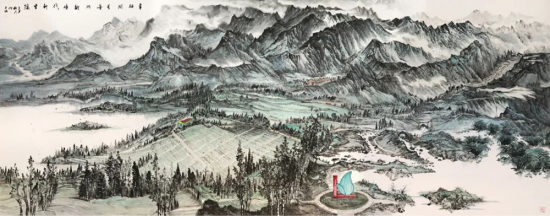
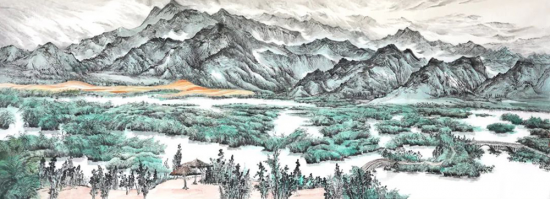
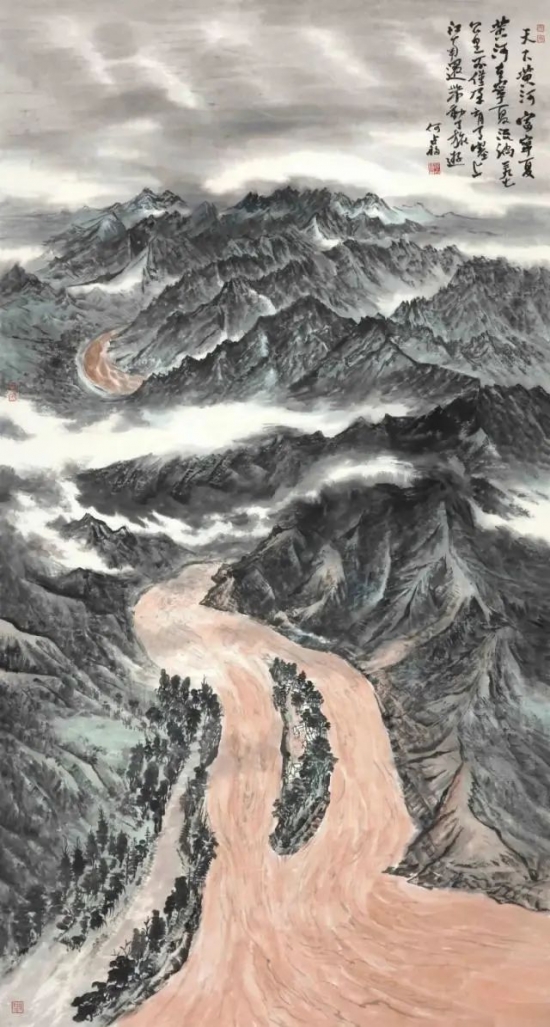
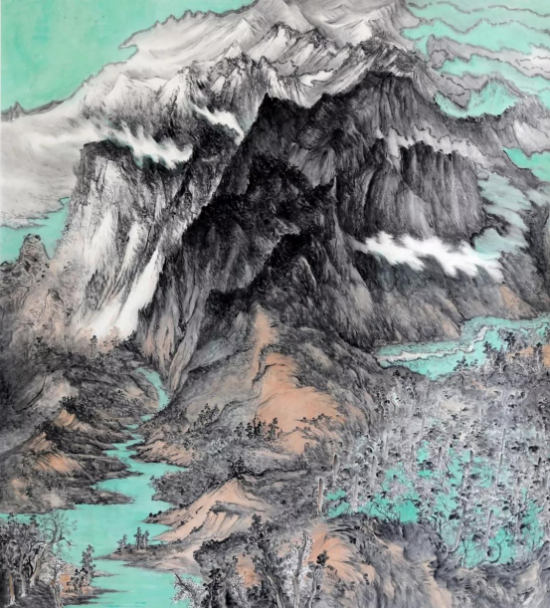
《绿水青山》215×190cm
首先,雄浑、苍茫体现在技法方面。《西部锦山》《深山古亭》《青山有约》《清晖在天》《西狭颂》《白云出山》……,在很多作品中,何占福用笔特别灵动,笔者不知道他是否故意使用“书法用笔”的方式去表现心中的图示,还是无意为之,笔者却处处感受到“书画同源”的意味,骨线、散锋、皴擦,线条随着提按的力量,随着方向的变化而随意生发,浓、淡、干、湿,积、破、焦、宿,流动的、变幻的、老辣的、豪迈的,丰富的笔性传递着心象,灵动的笔意表达着胸次,仪态万方,浩荡纵逸,简洁处,意态丰厚,恣肆,又妙趣横生,灵活多变的笔法彰显着雄浑、苍茫的视觉张力。 《黄河母亲河》180×180cm 其次,雄浑、苍茫体现在意境方面。《星海湖》《绿水青山就是金山银山》《巍巍贺兰山》《山水》《六盘山上高峰》等等鸿篇巨制,不管是远观,还是细品,都给观众一种强烈的视觉冲击力,这种冲击力源于对意境的渲染。何占福善于通过千变万化的笔法去构筑峰峦叠嶂的高原空间,以及深岩巨壑的近处山势,同时,借助皴擦的过渡关系、借助色彩、色墨的交融去表现流泉飞瀑和烟云吞吐的意境,黑与白的挤压,色与墨的辉映,以及色与色、色与墨,水与墨调和出的多彩,渲染出物态欣豫,神妙如动的超然之境,晓烟变幻,草木滴翠,绝涧岚清,幽谷空旷,峰峦竞秀,回峰断崖,江山如画,比江山还美,是一种势壮雄强、崇高静穆的大美,杜甫的《望月》、李白的《关山月》,不能道其妙,王之涣的《凉州词》、柳宗元的《江雪》,也不能言其真……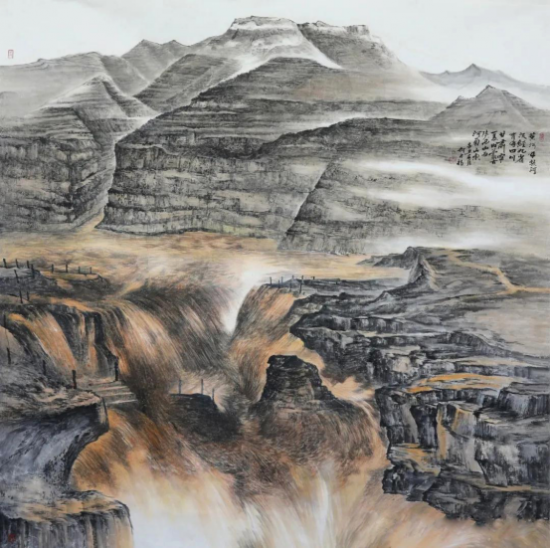
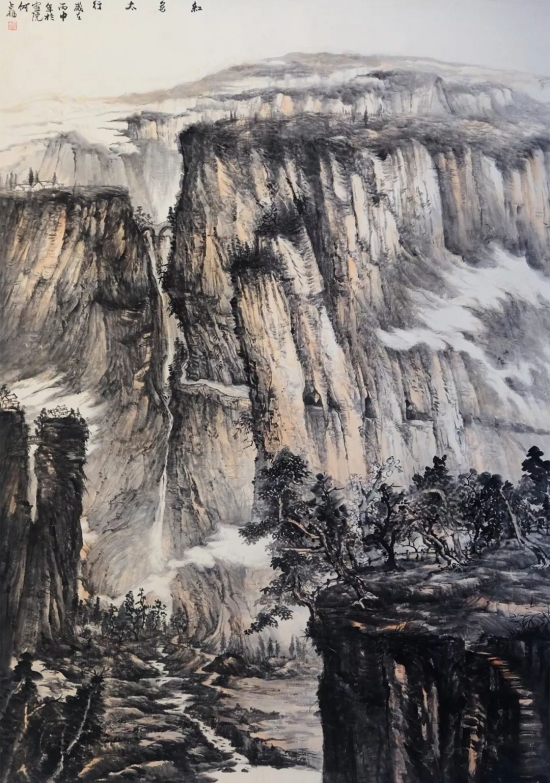
《红色太行山》240x120cm
再次,雄浑、苍茫体现在具象与意象的交融方面。几乎每一幅作品,何占福都注重意象与具象的互生关系。在处理意象时,何占福讲究虚与实的结合,强调远与近的呼应,更着力于层次与空间的过渡,从而使意象动与静、藏与露,乍合乍离,或聚或散;在处理具象时,他通过扎实的造型功力把色彩、光影、透视等新时代艺术表现语言充分运用于具体物象之中,使眼中的山石、草木、溪流在其娴熟的笔墨技法中,凸显出洗练的姿貌,让实体突出,自然真实,山形面面看,景形步步移,写一山是一山,绘一景是一景,不套用程式,不千篇一律,很鲜活,很自然。具象在意象的辉映中,若隐若现,忽淡忽浓,变幻交替,既给人一种身临其境的真实,又给人一种妙不可言的意境。画里虽是千山万水,画外则是超然物外的老庄、孔孟,亦有欲说还休的内心独白。 当然,以苍茫、雄浑论述何占福的山水,还需要进行更深入、更为全面地讨论,在此笔者抛砖引玉,旨在引起更多关注。 《热血忠魂》195cmx316cm 然而,苍茫、雄辉一定源于传统绘画与现代审美之间的平衡,生发于人生感悟、处世哲学、艺术真谛的结晶,进而表现为“笔墨当随时代”的笔端风华,孕育着使命、责任、担当,还孕育着深厚的文化学养、真力弥漫的精神、质地洁美的品格。 任何引起瞩目的艺术都必须历经积年苦修的过程,付出多少,就会得到多少,那么,笔者有理由相信,何占福以不忘初心的姿态与同事一起服务于当地美术事业的发展,必将迎来更加辉煌的明天,同时,何占福以笃定恒心,坚韧不拔的毅力躬耕于自己的精神家园,也必将收获别样的精彩。 《大地的记忆》180×180cm He Zhanfu is a director of the China Artists Association, chairman of the Ningxia Artists Association, and a full-time painter at the Ningxia Academy of Painting and Calligraphy. Visiting Scholar at the Chinese Academy of Art, Dean of Ningxia Academy of Landscape Painting, Dean of Shizuishan Academy of Calligraphy and Painting, Member of Ningxia Federation of Literary and Art Circles, Researcher at Ningxia Museum of Culture and History, awarded the title of "Famous Cultural Master of the Frontier" by the Autonomous Region, "Four Batches of Talents", enjoying subsidies from the municipal government, and is a representative of the 11th Ningxia Autonomous Region People's Congress. 《革命胜地》220cm × 200cm Writing about the vast expanse of mountains and rivers, painting the world in one's heart with grandeur and grandeur Wen/Sanggan Flipping through He Zhanfu's mountains and rivers over and over again, wandering through them, savoring and savoring, the author couldn't help but feel emotional. As a commentator who has been working in the calligraphy and painting industry for more than 20 years, I have dealt with many artists and interpreted many art works. It can be said that I have also developed an aesthetic perspective that can distinguish good from bad. Therefore, based on my understanding of painting, I would like to write a few short comments to express my understanding of He Zhanfu, which should be sincere and reasonable. 《贺兰山苏峪口》223×142cm For many painters, painting is a tool for making money or a means of making a living. However, for He Zhanfu, painting is a high mountain piled up with ink and brush, showcasing the unique charm of life and shining with radiance. However, his artistic charm is not only reflected in the visual aesthetic of "nearsightedness is like a thousand miles away, but also in his pure original intention of art, as well as his emotions of" reflecting things with the Tao and cherishing ignorance "and" using ink and brush to write about all things in heaven and earth while Tao swims ". It can be said that every stroke and painting is his spiritual refuge, and every mountain and water is his habitat for purifying the dust. 《云来山更佳》138cm × 68cm He Zhanfu was born in 1965 in Shizuishan, Ningxia. He currently serves as the Chairman of Ningxia Artists Association, Director of China Artists Association, and Dean of Ningxia Landscape Painting Research Institute. He Zhanfu is the organizer, coordinator, and participant of local art work, as well as a young and middle-aged landscape painter with strong artistic skills. His bloodline is infused with artistic genes, and his emotions are filled with landscape forms. He is also engaged in serving the public and local art workers. It can be said that He Zhanfu has an artistic life where work and art complement each other. Art is becoming increasingly rich and reflects his artistic vision that broadens his horizons due to his work. In terms of art, he gradually develops, comprehends, and gradually rises to the forefront of contemporary art. In his work, he unleashes his wisdom and talent, serving as a good "nanny" for local art workers, fulfilling his duties and working diligently. 《走进贺兰山》183cm × 97cm Referring to He Zhanfu's artistic experience and award-winning timeline, it can be seen that the combination of work and art requires him to have a social responsibility and responsibility of "being in his position and seeking his own politics", as well as to lead by example and not be willing to fall behind in the field of art. Therefore, He Zhanfu needs to invest more time and energy. On the one hand, he works in a lively manner, such as working hard for a young man. On the other hand, he takes a break from work and forgets to sleep and eat in his own artistic world. For more than 20 years, he has been at the "International Biennale", "Commemorating Ye Qianyu's Centenary Birthday", and "Wu Guanzhong Art Museum Opening". "National Exhibition of Chinese Painting Works", "National Art Exhibition Commemorating the 60th Anniversary of the Victory of the Anti Japanese War", "National Exhibition of Chinese Painting Commemorating the 70th Anniversary of the Victory of the Long March of the Chinese Workers' and Peasants' Red Army" As well as countless "National Famous Calligraphers and Painters Nomination Exhibitions" and various exhibitions organized by local art associations, He Zhanfu's works have been nominated time and time again and have won numerous awards. His work "Jiangshan So Many Beauties" has been collected by the Chinese Artists Association; His monumental works for the Great Hall of the People in Beijing, the Executive Hall of the People's Government of Ningxia Hui Autonomous Region, and the VIP Hall, as well as his monumental works for the Yinchuan Municipal Government, the Cultural Museum, and the VIP Hall, have received high praise; He has also held personal exhibitions at multiple provincial art museums, receiving endless praise and lingering echoes. Obviously, He Zhanfu submitted a satisfactory answer sheet to his fans through his persistent efforts. Fan Dian once exclaimed, "Perhaps it's because I'm too busy with work that every time I pick up a pen, it's the most relaxing moment.". Applying this viewpoint to He Zhanfu is actually the most appropriate one. The difference is that painting is the meaning of He Zhanfu's life, and painting well and displaying style is the foundation of his destiny. Therefore, He Zhanfu needs to invest more emotions in painting and strive for it. 《贺兰山金顶栈道》183cm × 97cm Undoubtedly, among the many forms of artistic expression, landscape can best express He Zhanfu's temperament. When he established the idea of using landscape to carry his character, he first researched miscellaneous notes, focused on reading a large number of painting theories, and conducted exploratory practice. When he was trapped in a bottleneck, he, like many famous painters, struggled, confused, and often couldn't sleep at night. The surging power inside often prompted him to seek answers and explanations. Therefore, he asked famous painters Jiang Baolin and Fan Yang's studio. Jiang Baolin pays attention to brushwork and composition, Fan Yang emphasizes artistic conception and Zen meaning, and He Zhanfu takes his teacher's approach, such as understanding brushwork and composition, and understanding artistic conception and Zen meaning. However, He Zhanfu does not take his teacher's approach, such as the specific expression of one stroke, one painting, one mountain, and one water. Instead, he takes a different approach to the law, while the Dao integrates the strengths of his teacher, integrates the strengths of various families, criticizes point painting, captures the artistic vitality that is detached from traditional and contemporary aesthetics, seeks his own expression methods, cultivates morality and industry, and calms down the soul. He Zhanfu's landscape is different from his teacher Jiang Baolin and his teacher Yang. It is different from traditional schools and schools, as well as the methods of modern families. He Zhanfu has his own artistic style.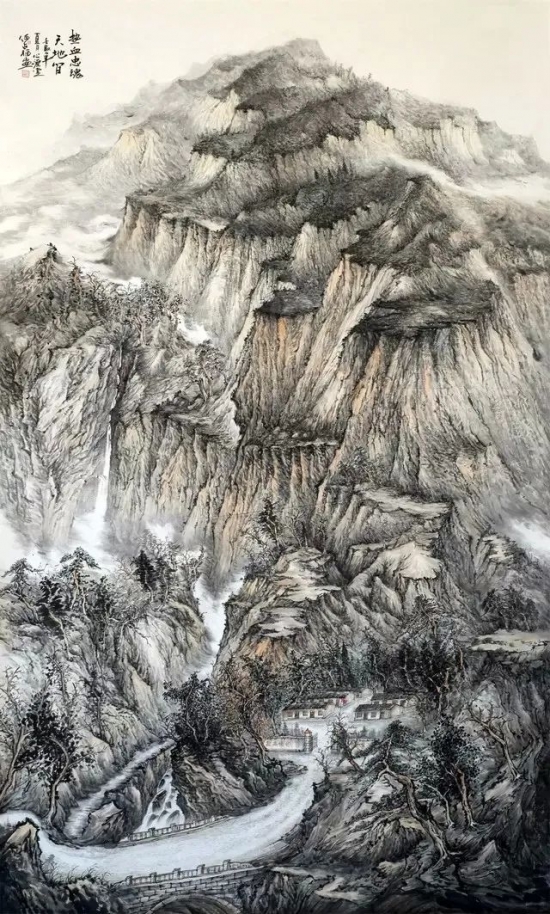
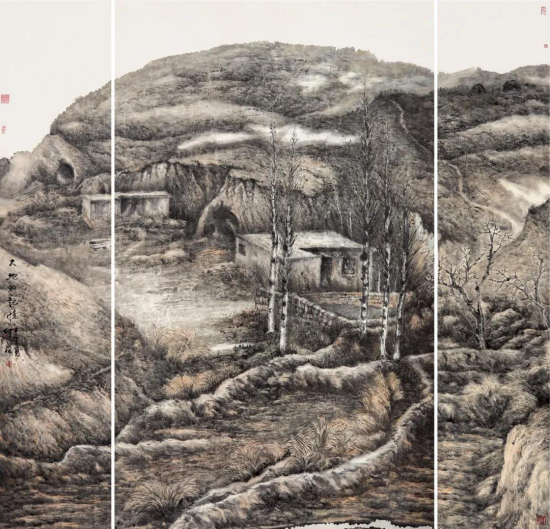

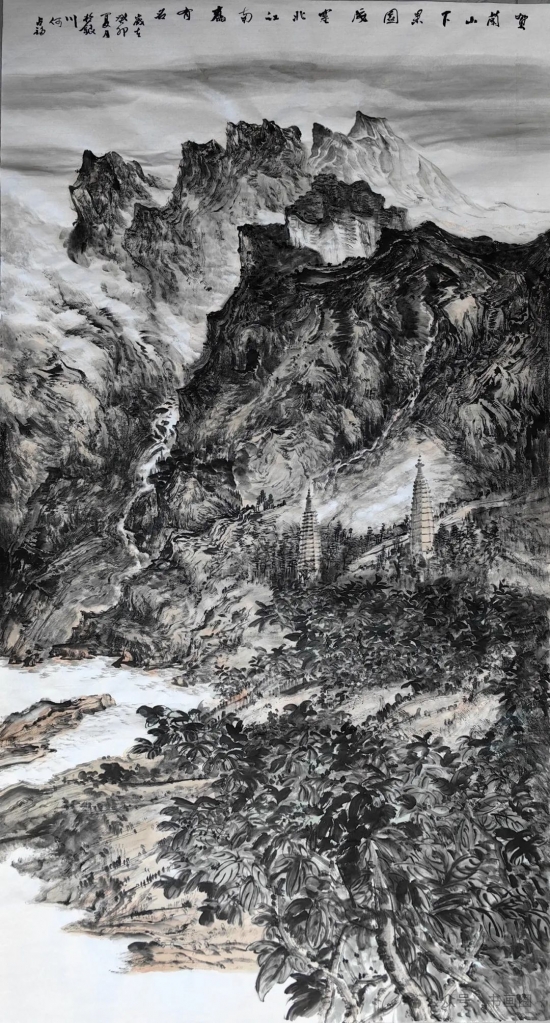
贺兰山下果园成 塞北江南旧有名
Looking at He Zhanfu's landscapes, it can be found that his expressive techniques are diverse and integrated. He can paint the strong and rich northern landscapes, as well as the warm and serene southern landscapes; He can create a blend of ink and water that blends texture, erasure, dots, and dyeing, as well as the texture effects interpreted by color blocks, brushstrokes, composition, light and shadow, and perspective; Concrete, he can paint wherever it is, imagery, he can be desolate, oil clouds, a lonely long wind. From his works, we can see his creative energy, which is the passion of bloodline tension and the power of full momentum. We can also see solid performance skills, using form to write about the god, then the god and form are both present, using form to flatter the way, then the heaven and man are unified.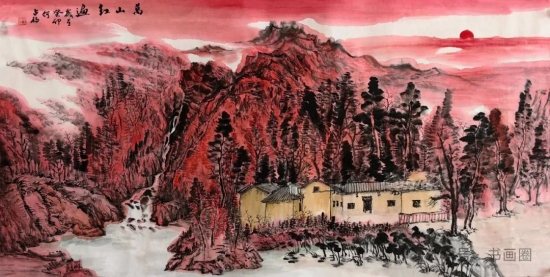
万山红遍
He Zhanfu is good at mastering large paintings. His paintings, such as "The Xumi Grottoes," "The vast green mountains enter the mist," "The Memory of the Earth," "The Kiss of the Mountains," "The Mother River," and "The Red Classics," have emerged from traditional brushstrokes, but have not fallen into the confines of a certain school or school. These works not only carry traditional norms, but also always observe and feel nature with the eyes of modern people, extracting the realm and spiritual charm in the painting, highlighting the artistic personality of "I paint my heart," but also elevate the realm of "learning from outside and obtaining the source of the heart.". Even in his paintings of the Four Foot Pavilion, he still searches for ingenuity and creativity, creating in his heart and striving for the essence of nature. For example, works such as "A Hundred zhang Plain Cliff Crack", "Deep Mountain Ancient Pavilion", "Qing Shan You Yue", "Clear Sunshine in the Sky", "Ode to the Western Narrows", "White Clouds Leaving the Mountain", and "Lin Quan Xiuzhi" all capture their charm through the thousands of miles of clouds and valleys, and the rivers and mountains are all exquisite works.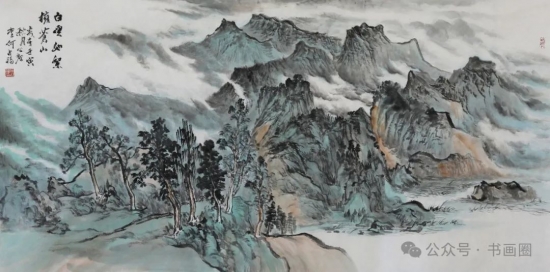
白云如絮拥苍山
Through these works, one can see that grandeur and vastness are the main characteristics of He Zhanfu's works. Firstly, the grandeur and vastness are reflected in the techniques. In many works, He Zhanfu's brushstrokes are particularly agile, such as "Western Jinshan", "Deep Mountain Ancient Pavilion", "Qing Shan You Yue", "Clear Sunshine in the Sky", "Ode to the Western Narrow", and "White Clouds Leaving the Mountain". I don't know if he intentionally used the "calligraphy brush" method to express the illustrations in his heart, or if he did it unintentionally. However, I can feel the meaning of "calligraphy and painting have the same origin" everywhere. The bone lines, scattered edges, and cracked eras, and the lines randomly sprout with the power of lifting and pressing, with changes in direction: thick, light, dry, wet, accumulated, broken, burnt, and lingering, flowing, changing, spicy, and bold. The rich brushwork conveys the mind image, while the agile brushwork expresses the chest. It is elegant, grand and elegant, concise, rich in meaning, unrestrained, and full of wit. The flexible and varied brushwork highlights the powerful and boundless visual tension. Secondly, the grandeur and vastness are reflected in the artistic conception. The magnificent works such as "Starry Lake", "Green Water and Green Mountains Are Gold and Silver Mountains", "Weiwei Helan Mountain", "Landscape", "On the Peak of Liupan Mountain", etc., whether viewed from afar or in detail, give the audience a strong visual impact, which stems from the rendering of the artistic conception. He Zhanfu is good at building the plateau space of mountains and mountains, as well as the mountains near the deep rock and huge ravines through the ever-changing writing techniques. At the same time, he uses the transitional relationship of texturing, the blending of color, color and ink to express the artistic conception of flowing springs, waterfalls and smoke clouds, the extrusion of black and white, the reflection of color and ink, and the color of color and color, color and ink, water and ink, rendering a transcendental realm of exuberant nature and moving spirit. He knows the changes of smoke, the green vegetation, the clear water, the empty valley, the beautiful peaks and peaks, and the broken peaks The cliffs are picturesque and more beautiful than rivers and mountains. They are magnificent, majestic, sublime and serene. Du Fu's Watching the Moon, Li Bai's Guanshan Moon can't explain their subtlety, Wang Zhihuan's Liangzhou Ci, Liu Zongyuan's Jiang Xue can't say their truth Once again, the grandeur and vastness are reflected in the fusion of concrete and imagery. Almost every work, He Zhanfu emphasizes the symbiotic relationship between imagery and concreteness. When dealing with imagery, He Zhanfu emphasizes the combination of virtuality and reality, emphasizing the echo of distance and closeness, and focusing more on the transition between hierarchy and space, so as to make the imagery dynamic and static, hidden and exposed, merging and separating at first, or gathering or dispersing; When dealing with concrete objects, he fully applies the language of new era art expression such as color, light and shadow, and perspective through his solid modeling skills, making the mountains, plants, and streams in his eyes stand out in his skillful brushstrokes, highlighting their refined appearance, making the entities stand out, natural and realistic. The mountain shapes and surfaces are visible, and the scenery moves step by step. Writing about a mountain is a mountain, painting a scene is a scene, without using any procedures or conventions, it is very vivid and natural. In the radiance of imagery, concreteness appears faintly, fluctuating in intensity and intensity, giving people both an immersive reality and an indescribable artistic conception. In the painting, although there are countless mountains and rivers, outside the painting, there are transcendent Laozhuang and Confucius and Mencius, as well as inner monologues that desire to speak and rest. Of course, a more in-depth and comprehensive discussion is needed to discuss He Zhanfu's landscape with vastness and grandeur. Here, the author aims to draw more attention by offering valuable insights. However, the vastness and grandeur must originate from the balance between traditional painting and modern aesthetics, stemming from the crystallization of life insights, philosophy of life, and the true essence of art. It is then manifested as the elegance of the brushstrokes that follow the times, nurturing mission, responsibility, and responsibility, as well as profound cultural education, a spirit filled with truth, and a character of pure and beautiful texture. Any eye-catching art must go through years of hard work, and as much as one puts in, one will receive. Therefore, the author has reason to believe that He Zhanfu, with an attitude of not forgetting his original intention, will serve the development of the local art industry with his colleagues, and will surely usher in a more brilliant tomorrow. At the same time, He Zhanfu, with unwavering perseverance and perseverance, will devote himself to his spiritual home, and will also reap a different kind of brilliance.